
· 3 min read

Euro Banknotes Set for 1st Redesign in Two Decades

Astrid Mitchell
Astrid Mitchell · Editor
Euro Banknotes Set for 1st Redesign in Two Decades

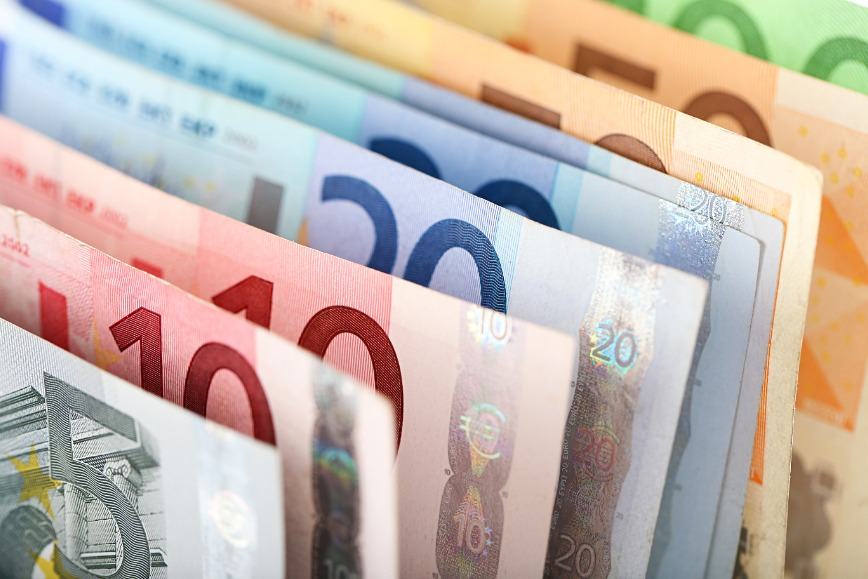
Euro banknotes are facing a redesign for the first time since their launch two decades ago, with a plan to make the currency ‘more relatable to Europeans of all ages and backgrounds’.

The European Central Bank (ECB) has announced the rationale and plans for the redesign, working with European citizens in a process that is expected to lead to a final decision in 2024. This will be the first major redesign since the launch of the euro banknotes in 2002.

According to the ECB website, the redesign process will start with the creation of focus groups, tasked with gathering opinions from people across the euro area on possible themes.

A theme advisory group, with one expert from each euro area country, will then submit a shortlist of new themes to the ECB’s Governing Council. The members of the advisory group have already been appointed by the ECB based on proposals from euro area national central banks, and are drawn from a variety of fields such as history, natural and social sciences, the visual arts and technology.

Following the proposals from the advisory group, the ECB will call on the public for their input on the shortlisted themes. A design competition for the new banknotes will follow, after which the ECB will again consult the public. The Governing Council will take the final decision.

‘Euro banknotes are here to stay. They are a tangible and visible symbol that we stand together in Europe, particularly in times of crisis, and there is still a strong demand for them,’ said ECB President Christine Lagarde. ‘After 20 years, it’s time to review the look of our banknotes to make them more relatable to Europeans of all ages and backgrounds.’ The launch of this process follows a commitment by the ECB’s Governing Council to ensure innovative and secure banknotes that connect with Europeans. The latest Study on the Payment Attitudes of Consumers in the Euro Area (SPACE) showed that cash remained the most popular means of payment for in-person retail payments in 2019.

And as part of its Cash 2030 strategy, the Eurosystem is taking concrete steps to guarantee that cash continues to be available and accepted as a means of payment well into the future – including following the possible launch of a digital euro.

‘We want to develop euro banknotes that European citizens can identify with and will be proud to use as their money,’ said ECB Executive Board member Fabio Panetta. ‘The process to redesign the euro banknotes will run in parallel with our investigation on a digital euro. Both projects aim to fulfil our mandate of providing safe and secure money to Europeans.’ Current euro banknote designs are based on an ‘ages and styles’ theme, represented by windows, doorways and bridges. They were deliberately neutral, and non-specific to any country or culture, in order to avoid any political tensions over the launch of the single currency. In the event, their introduction went very smoothly and there was rapid and positive acceptance of the new currency throughout the euro area.

Acknowledging, however, that portraits are more intuitively recognisable than objects, the upgraded Europa series that was introduced from 2013 onwards used images of the mythical goddess of the same name in the watermark and holographic stripe to add a quasi-human touch.

However, the Europa series was primarily a refresh and an opportunity to introduce new and enhanced security features. The next series will be a wholesale redesign.

After completing the design process, the Governing Council will authorise the production of the new banknotes and decide on potential issuance dates.

As of September 2021, the net number of euro banknotes in circulation stood at 28 billion pieces. The number of EU countries that have adopted the currency stands at 19 (with two more, Croatia and Bulgaria) set to join in the next couple of years. At the end of the first year following its launch, when it was used by 12 member countries, the volume was 15 billion.

Subscriber content

Read the full article

Full access to Currency News articles, newsletters and archives.

Sign Up to Currency News Weekly

Receive regular updates on the latest news and articles posted on our website.