Israel: Cash – The Point of No Return
Amir Safranovich, Head of Cash Management in the Currency Department at the Bank of Israel (BOI) introduced his presentation at the European Cash Cycle Seminar with the title ‘Cash: The Point of No Return’.
He went on to explain that in Israel this point has not yet been reached, even though it has been, or is close to being, reached in some countries. But he feared that it could happen soon in Israel, and if it did, it would be irreversible.
So currently the most important aspect of his job is to avoid this happening, which can only be achieved by managing the change to ‘less cash’ and not to ‘no cash’.
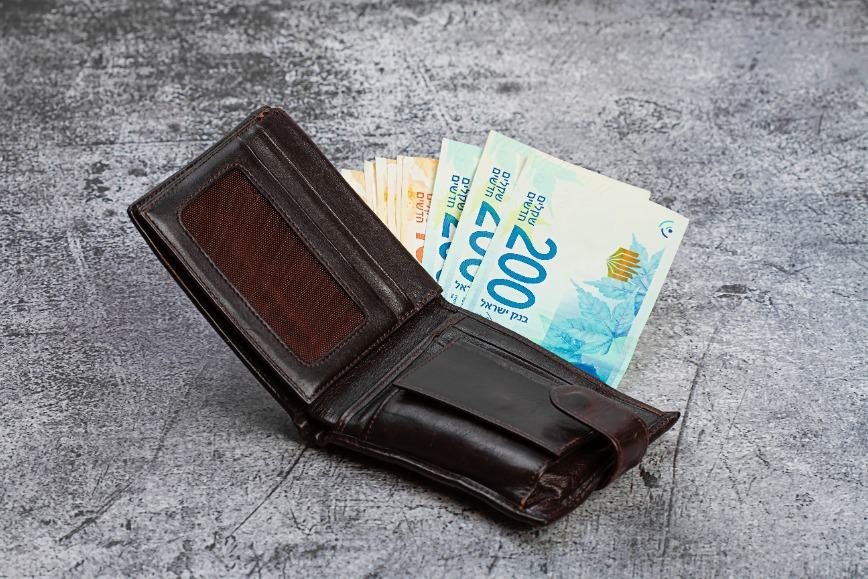
Israel has a population of 9.3 million and its banknote series has four notes – the 20, 50, 100 and 200 shekels (NIS). As in many other countries, Israel’s cash in circulation by value had been increasing, on average at the rate of 5% each year, until the end of 2019. But from March 2020, with the arrival of COVID-19, to October 2021 it increased by 36%.
This huge increase was not planned. An analysis of the denominations found that only the NIS 200 increased as a percentage of the total (from 54% to 58%), with the percentages of the other three declining. The impetus for the increase would appear to be holding cash as a security in the crisis, or as a store of value, or both.
The BOI has only one centre in the cash cycle, from which it issues new or fit cash but receives only unfit or reject notes. There are 14 cash centres and three large CIT companies involved in supplying new or fit cash to five commercial banks, one postal company, bank ATMs (2,500), private ATMS (4,860) and some retailers. The public receive almost all their cash from ATMs and commercial banks.
The concern of the BOI is that as cash usage for transactions declines further, how would the public still have access to cash if providers within the cash cycle reduced or stopped cash availability, eg. if non-profitable ATMs were removed or commercial banks no longer provided cash over the counter.
Already there are signs that this is happening. An example given was that large retailers used to have 10 cash desks operating in their stores, but now the majority have reduced these to just two. The BOI fear is that once a cash facility is gone, it will never be replaced. So, if cash usage for payments continues to fall quickly, then unless action is taken now to ensure the availability of cash in the future, the point of no return could happen within just two or three years. Cash would be far less available than at present, so inconvenient to access and there would be few places to spend it.
Cash is required not only for retail transactions but also for emergencies. When an emergency does occur, queues immediately form at ATMs, and they are quickly emptied. So, if there were far fewer ATMs than at present, the situation could be chaotic.
There are other reasons why people use or prefer cash - those not digitally conversant, those who are poor, those who like privacy, those who manage their spending and budget with cash and, in Israel, those whose beliefs or traditions prevent the use of other forms of payment. Some just prefer to use cash and consider its availability as a public service.
The BOI has determined, considering these issues and more, to implement a plan to enable the continued availability of cash for those that need it for whatever reason.
It has started by defining the current system – ie. the services provided by the BOI to entities that are partners in the currency system as well as the services required by the entities. It is also making it mandatory to accept cash as a payment. Operating guidelines such as specifying the denomination mix in withdrawals have been introduced so the cash withdrawn is suitable for payments large and small, and there will be legislation regarding which ATMs must remain in operation so that cash remains available! It is also defining the guidelines for cash supply in an emergency. And most important, by maintain cash availability it will ensure financial inclusion.
Subscriber content
Read the full article
Full access to Currency News articles, newsletters and archives.