
· 4 min read

New £50 Note Celebrates Science and Diversity

Astrid Mitchell
Astrid Mitchell · Editor
New £50 Note Celebrates Science and Diversity

The Bank of England has unveiled the design for the new £50 which, when it goes into circulation in June, will compete the transition to a new all-polymer series.

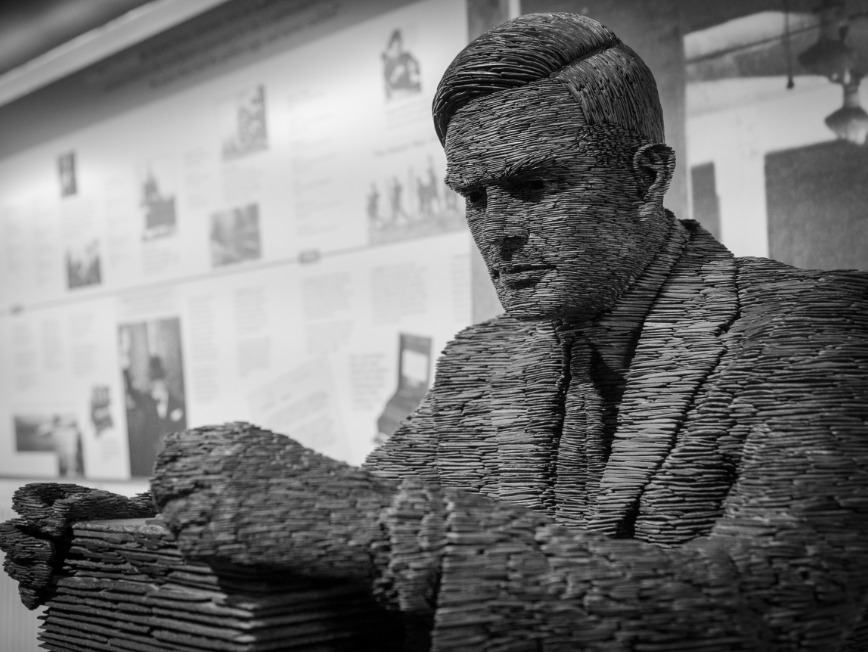
The mathematician Alan Turing, known as the father of modern computing, was chosen for the £50 following the Bank’s character selection process. In 2018, the public were invited to nominate candidates and nearly 230,000 people did so, covering 989 eligible characters. The Banknote Character Advisory Committee (CAC) narrowed these down to a shortlist of 12, and the decision was taken by the Governor (at the time, Mark Carney). His successor, Andrew Bailey, unveiled the new note at a virtual press conference on 25 March.

The UK has few circulating denominations compared with most other countries – just four. And of those, the £50 is rarely seen in circulation, being principally held as a store of value. The main reason for its limited use as a transaction note is that, because it seldom circulates, the public aren’t familiar with it and so don’t trust it.

The decision to use the same substrate and core security features across all denominations was taken, in part, to offset this lack of familiarity and hence trust. As Sara John, the Bank’s Chief Cashier, told Currency News, the use of the same types of features, particular those of the £20, will make it easier for people to recognise them on the £50. Also, the size has been reduced by 15%, making it easier for the notes to fit into wallets. And whilst £50 notes are not routinely dispensed from ATMs, some are and the number is growing.

Longevity, she stressed, whilst being a key criterion in substrate selection for the lower value notes that circulate frequently, was not an issue here since there is little need for replacements.

There are currently 350 million £50 notes worth £17.5 billion in circulation – 1 in 13 of all notes. They will remain legal tender for limited period following the issue of the new notes. The Bank has said it will give a least six months’ notice before the old notes are withdrawn.

The main design and security features of the £50 are centred on Turing’s life and work. In addition to his portrait, the note include a table and mathematical formulae from his seminal 1936 paper ‘On Computable Numbers, with an application to the Entscheidungsproblem’, which introduced the concept of a Turing machine as a thought experiment of how computers could operate, and is widely recognised as being foundational for computer science.

The images also includes Turing’s Automatic Computing Engine (ACE) Pilot Machine, one of the first electronic stored-program digital computers, ticker tape depicting his birth date in binary code, and a famous quote of his: ‘this is only a foretaste of what is to come, and only the shadow of what is going to be’.

Perhaps the most striking feature is the large see-through window and colour foil stripe, which is shown to its best on the smooth polymer surface.

The stripe – based on KINEGRAM Colors® from KURZ – comes in green, gold and metallic colours on the front, and red and silver on the back, visible through the clear window.

On the front, at the top of the stripe, is the royal crown expressed in a 3D relief effect, whereby the crown seems to be protruding from the surface, while in fact it is an optical effect, being completely flat to the touch. Behind the crown are individual dynamic colours. At the bottom of the stripe the words ‘Fifty’ and ‘Pounds’ flip between one word and the other as the note is tilted.

The middle of the foil stripe contains an image of a microchip, and of a sunflower, reflecting Turing’s work on computing, and on the mathematics involved in organic growth. To the left is a portrait of the Queen, viewable from either side of the note.

In addition to the main window, there is a smaller see-through window in the bottom corner of the note, the shape of which is based on architectural features at Bletchley Park, the wartime intelligence centre where Turing’s work cracking the codes of the German Enigma machine is credited with saving millions of lives by bringing World War II to an earlier end.

The new £50 was designed by the Bank’s in-house designer, Debbie Marriott, in conjunction with De La Rue and the feature suppliers. It was printed by De La Rue. The polymer substrate is divided between CCL Secure’s Guardian® and De La Rue’s SAFEGUARD®.

In tribute to the legendary mathematician and codebreaker, the UK intelligence agency GCHQ has set a series of puzzles linked to the note. The brain teasers pick out various symbols, signs, and drawings on the banknote and, according to GCHQ, the 12 riddles in its so-called Turing Challenge should take experienced solvers around seven hours to complete from start to finish.

GCHQ also acknowledged the appalling way Turing was treated during his lifetime. ‘Turing was embraced for his brilliance and persecuted for being gay’, it said. He eventually took his own life aged 41. To mark his contribution to diversity, the rainbow flag flew over the Bank of England’s premises in London on the day of the launch.

The new notes will go into circulation on 23 June, the anniversary of Turing’s birthday. The unveiling and then issue of the different notes in the new series has traditionally been accompanied by a special ceremony in a location specific to the character on the note. According to Sarah John, whether this happens or not with the £50 will depend on COVID restrictions in June.

Subscriber content

Read the full article

Full access to Currency News articles, newsletters and archives.

Sign Up to Currency News Weekly

Receive regular updates on the latest news and articles posted on our website.