Counterfeiters Turn their Attention to Polymer
It was only a matter of time! One of the claimed benefits of polymer is that it is more resistant to counterfeiting and hence more secure, and the figures bear that out.
But some argue that the reason for lower incidents of polymer counterfeits is that, with 95% of the world’s banknotes still produced on paper, criminals will follow the path of least resistance and target those currencies with the greatest potential returns.
Or to put it another way, they won’t bother with polymer because there isn’t enough of it around to make it worth their while. There may have been an element of truth in that in the early days, but not today, with more countries now adopting polymer. And needless to say, the rise in polymer adoption is also bringing a rise in counterfeits.
We take a look at the background to the development of polymer for enhanced security, and also the most recent case in Romania, where – unlike most attempts to date to counterfeit polymer notes - the criminals were professional and, for a short period of time, successful.
Where it all began
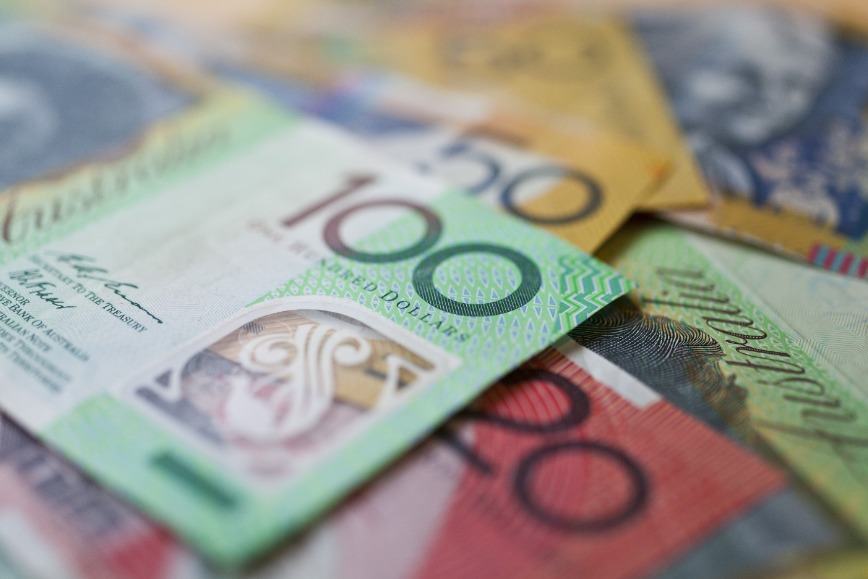
Polymer banknotes were developed by the Reserve Bank of Australia (RBA) to overcome counterfeiting of their newly introduced Australian dollar banknotes, which replaced imperial pounds in 1965 with the introduction of decimalisation.
Just 10 months later, a group of amateurs using basic printing equipment produced fake A$10 notes, in total worth well over A$12 million in today’s currency. Although the counterfeiters were caught, the fake notes continued to circulate for a number of years, reducing the public’s confidence in the new currency.
The RBA turned to the country’s scientists at CSIRO (Commonwealth Scientific and Industrial Research Organisation) – challenging them to develop ‘the world’s most secure banknote’. The idea for polymer came from a business card printed on plastic given by a visitor from Japan several years into the research. By 1972, CSIRO and the RBA had agreed to commence a project to develop polymer banknotes. The first, commemorative, polymer banknote was issued in 1988 - the year of Australia’s bicentennial.
The RBA’s statistics indicate that from 2005-2010 and from 2011-2020 the number of counterfeits per million notes in circulation were 7 and 18 respectively, both low figures. Australia’s experience is no exception; polymer banknotes have enjoyed low counterfeiting in other countries with an all polymer series such as New Zealand and Canada.
There are two likely reasons.
First is the above-mentioned reason – namely that there are so few polymer series or banknotes compared with cotton banknotes that counterfeiters ignore them and concentrate on easier and more lucrative paper based targets instead.
Second is that they really are harder to counterfeit.
First case of industrial counterfeiting
Both could be valid, but what is undeniable is that, until recently, relatively few cases of large volume polymer counterfeiting have been recorded, one known exception being the Mexican 50 peso, with low quality counterfeits first emerging in 2010 but then more professional versions that could not be distinguished from the genuine notes entering circulation on an ‘industrial scale’. The criminal gang responsible for the counterfeits was apprehended, but not before an enhanced note with new security features was developed, and plans to convert the 100 peso to polymer scrapped.
Of more recent interest is the counterfeiting of polymer notes in Romania, whose central bank first introduced polymer notes in 1999 – the first European country to do so. A series with polymer being used for all denominations was introduced around 2005.
This series proved to be very successful both from a durability and security viewpoint, with counterfeiting being exceptionally low; for the last five years it has been under 4ppm.
However, in June 2020, 15 years after the current series was put into circulation, the Romanian Directorate for Investigating Organized Crime and Terrorism (DIICOT) took down an illegal print shop counterfeiting Romanian leu. In the day’s action, Europol deployed one specialist providing expertise and live checks on its databases in support of the operational activities.
The Romanian DIICOT detained a man who was accused of leading a gang that began its activities in 2014 and produced just over 17,000 of the best counterfeits in Romania to date. Investigators were able to identify a fingerprint on one of the fake banknotes, which helped them track down the suspects.
Careful counterfeiters
According to prosecutors, the counterfeit banknotes were difficult to detect, being produced on polymer and imitating all security elements intended for the public. This meant they would also have been very difficult for the Romanian public to detect, especially since, prior to this, counterfeits were so rare. In particular the transparent window was very well imitated, so it is very likely that few inspected their notes carefully. Not only were the general public fooled, but also the cashiers of commercial units and financial institutions.
Also, the gang were careful in passing the notes – issuing only a few at a time and varying the locations. According to DIICOT the counterfeit notes were first identified in cash processing centres. The value of the 17,065 counterfeit 100 leu (RON) notes was around RON 1.7 million (c. €374,000).
Just seven months later, Europol were again in action with the Romanian authorities, this time dismantling an organised crime group responsible for circulating both counterfeit euro banknotes and counterfeit Romanian lei. Counterfeits of value €50,000 were prevented from entering circulation due to the operational activities carried out during the preliminary investigation.
Law enforcement authorities from Austria, Belgium, Germany, and Spain as well as from the European Central Bank assisted in the investigation, which resulted in 10 arrests, the seizure of €450,000 in counterfeit notes as well as 16,000 genuine euros and leu, and the confiscation of cocaine and cannabis.
Of significant note is that these counterfeiters had also acquired the necessary technology to print the notes on polymer substrate to fake the Romanian leu (most counterfeit ‘polymer’ notes are produced on paper). The criminals had adapted their methods and materials for the type of banknotes they were producing. Overall, 1,300 counterfeit banknotes were identified and withdrawn from circulation.
In addition to these well-publicised cases, there have been growing reports of polymer counterfeits being found in the UK, Canada and Australia. So should the industry be concerned that counterfeiting of polymer notes is set to rise, especially if the print and feature quality of counterfeits improves and polymer substrate is used?
Probably not!
Just as paper banknotes have to be periodically upgraded in order to keep ahead of the counterfeits, so do polymer notes. None of the counterfeits reported here were protected by the more up-to-date polymer security features now available.
Canada’s decision to move to polymer in 2011 was based on both increased counterfeit resistance as well as durability. The performance of the new series exceeded the Bank of Canada’s expectations, which in turn led to new security features being developed specifically for polymer banknotes by both polymer suppliers and industry security feature suppliers. The banknote paper suppliers responded with new high security features for their substrate, as did hybrid substrate suppliers.
So central banks today have a wider selection of substrates and suppliers to choose from. All offer high technology security features and counterfeit resistance, durability and environmental qualities. Not that they will stop the criminally-minded from trying.
Subscriber content
Read the full article
Full access to Currency News articles, newsletters and archives.