Getting Behind the Counterfeit Banknote Statistics
COVID19 led to a decline in the number of counterfeit banknotes in 2020. Or did it?
It did lead to a reduced chance of encountering a counterfeit banknote – not only were normal payment interactions reduced, but in many countries the number of genuine banknotes in circulation surged upwards. This changed the ratio of counterfeit notes to genuine banknotes in circulation, with a consequent drop in the standard ‘parts per million’ (ppm) counterfeit measure used by many central banks.
However, the reality of how COVID-19 impacted counterfeit banknotes is more complex – supply chains and distribution routes of the counterfeiters were disrupted. New methods were adopted.
There were also new entrants into the counterfeit money trade as more people went into poverty and as criminals who were normally involved in drug trafficking and human trafficking sought alternative activities.
Only part of the picture
The parts per million measure referring to notes removed from circulation only tells us part of the picture – it doesn’t tell us anything about what happened to seizures of uncirculated counterfeit notes or how the level of counterfeit threat changed during this period.
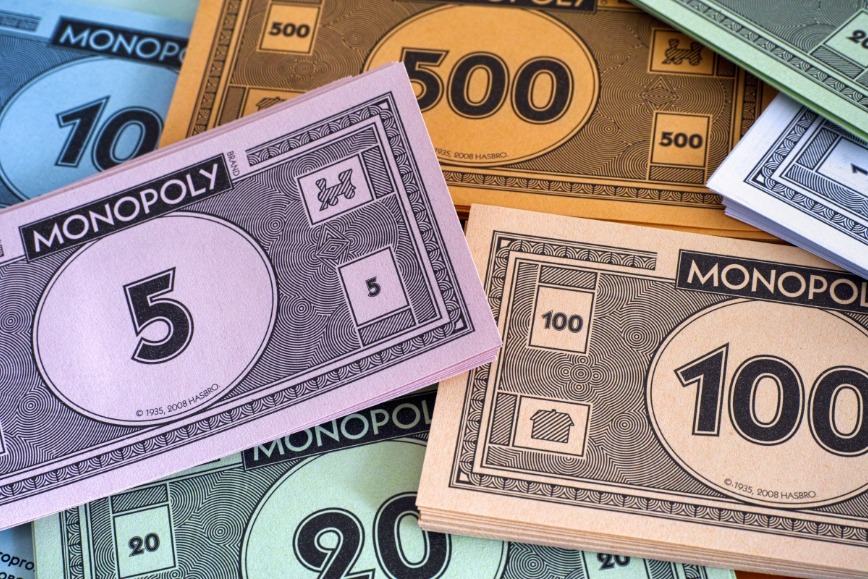
The level of counterfeit threat is also impacted by the quality of counterfeits encountered. The parts per million measure doesn’t tell us how convincing any of the counterfeits were. In recent history we’ve heard of simulated ‘money’ from children’s games being used (in one instance even having the logo of The Early Learning Centre toy shop stamped on the note) as well as ‘prop’ or ‘movie’ money that can be purchased online. One of these notes will count as being equivalent to a highly convincing counterfeit in the data, despite representing different levels of threats.
If you’re primarily dealing with low quality counterfeits your overall counterfeit threat may be lower than that of another country with equivalent data. In Australia a significant number of ‘polymer’ counterfeits are produced on paper notes, providing the public with a simple tear test to identify the fakes.
Importance of layered security
This is part of the reason we emphasise the importance of layering the security throughout the banknote and public education in the fight against the counterfeiter.
At a basic level there is a need for a distinctive banknote feel to act as a trigger that something is wrong. Then there is the need for something that doesn’t photocopy or scan well as a static feature – a polymer window that loses its transparency, a holographic feature that loses its rainbow colour, an IGNITE® thread that goes dark when photocopied etc.
Whilst optically variable effects are important as authentication tools, banknotes also benefit from features that when photocopied or scanned, the static image of the feature triggers a response that something is amiss and requires closer inspection. Level 2 and 3 features then further secure the banknotes.
The banknote issuing authorities that have transitioned to polymer report a reduction in their counterfeiting statistics following the polymer upgrade. Whilst providing an indication that the newer polymer banknotes are harder to counterfeit, critiques state that counterfeit rates often drop when a new series is introduced.
We don’t always see this drop in the statistics with a new series. Sometimes counterfeiters rush to maximise their return on investment in the old series before the old notes are discontinued. Sometimes counterfeiters rush to take advantage of the confusion of a new note not being well known to put out lower quality notes that they find relatively easy to manufacture.
However, the consistent reporting of counterfeit rates dropping for every issuing authority who transitioned to polymer is reassuring.
It’s worth highlighting that there will have been attempts to simulate every type of security feature out there and the majority of banknotes at some point. Central banks should consider the quality of the counterfeits, the volume of the counterfeits and the frequency of counterfeits when assessing the size of the threat they face.
Creating huge barriers
For instance, the Romanian counterfeits discussed in this edition of Currency News may have been good quality counterfeits, but they were produced via a slow process involving many steps, and the organised crime group was very cautious about how they distributed it, normally passing only one or two at a time. Producing these counterfeits required a significant investment in the purchase of wide format inkjet printers, plastic film and the various colours of ink, which the majority of counterfeiters do not have the financial resources to invest. Polymer banknotes create a huge barrier for the beginner and hobbyist counterfeiters, who produce most of the counterfeit banknotes across the globe.
It is usually only the high-quality counterfeits of significant volume that make the big news stories; so it is important to recognise that these are not your ‘average’ counterfeiters and that the banknotes they are targeting are not any less secure than others. The concept of layered security is implemented specifically for these types of criminals as it cuts into their profit margin.
For every good quality polymer counterfeit in existence there is an equivalent for paper, and banknote issuance authorities should dig into the data and context and not be alarmed that a specific incident suddenly means a certain specification is not secure.
I mean, they were caught after all, right!
Subscriber content
Read the full article
Full access to Currency News articles, newsletters and archives.