
· 4 min read

Indonesia Issues New Series on Independence Day

Astrid Mitchell
Astrid Mitchell · Editor
Indonesia Issues New Series on Independence Day

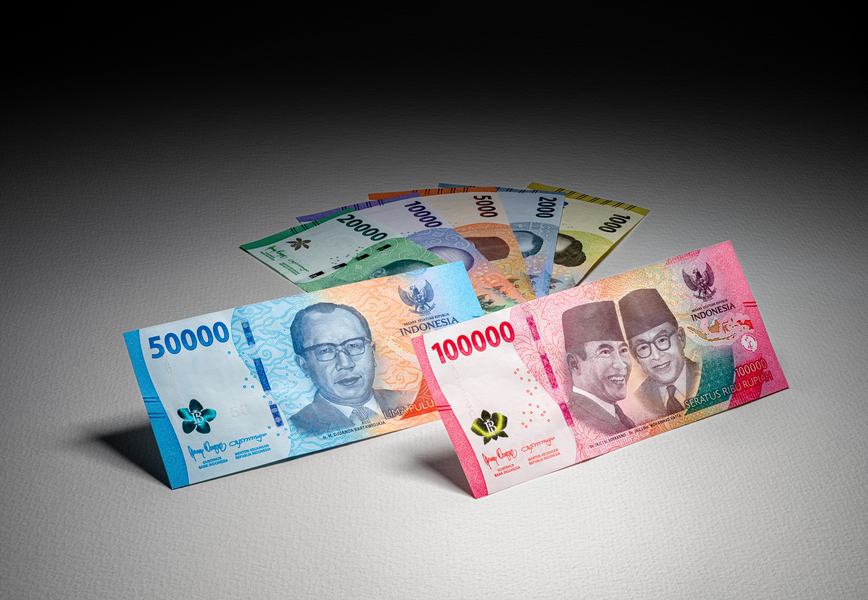
Bank Indonesia (the Central Bank of the Republic of Indonesia) has designed a completely new series of banknotes, with significantly improved security features over the previous designs, selecting the nation’s Independence Day, 17 August, to launch them.

Indonesia, officially the Republic of Indonesia, is a located in Southeast Asia and Oceania between the Indian and Pacific oceans. It comprises over 17,000 islands, making it the world›s largest archipelagic state and, at over 1.9 million km², the 14th largest country by area. With over 277 million people, it is also the world’s fourth-most populous country and has the fifth largest economy in Asia.

Indonesia was colonised in the early 16th century by Portuguese traders seeking to monopolies the source of nutmeg, cloves and pepper. Dutch and British traders soon followed, and in 1602, the Dutch established the Dutch East India Company and became the dominant European power for almost 200 years. In 1800 this was replaced as the Dutch East Indies.

The Japanese invasion and subsequent occupation during World War II ended Dutch rule. Two days after the surrender of Japan in August 1945, Indonesian independence was unilaterally declared. A struggle with the Dutch followed, before the Netherlands formally recognised Indonesian independence in 1949.

Following the declaration of independence, the national currency – the rupiah (which derives its name from the Sanskrit word for silver) was introduced. It is divided into 100 sen, although inflation has rendered all coins and banknotes denominated in sen obsolete.

The current rupiah consists of coins from Rp 50 up to Rp 1,000 and seven banknotes from Rp 1,000 up to Rp 100,000. Long-running proposals, including by Bank Indonesia itself, to redenominate the currency by removing three zeroes have come to nought.

Cash is the most commonly-used payment instrument, comprising over 53% of all POS transactions, albeit that this fell from 73% in 2020. This preference is attributed to the fact that Indonesia’s unbanked population is 181 million (two thirds of the population), making cash a necessity. There are 51.6 ATMs per 100,000 adult population. Credit card penetration is low, with 16.5 million in 2021, a decrease over the previous two years.

However, Bank Indonesia is attempting to change this with its Payment Systems Blueprint 2025, which was published in 2019 and focuses on the development of a digital economy via the digitisation of payments and payment systems.

Examples include tapping into the country’s 200 million-plus smartphone users by introducing the Quick Response Code Indonesia Standard (QRIS), which pulls together services of all digital payment providers under one central QR code.

In addition, in 2021, 72% of local financial institutions pledged to focus on the country’s unbanked population, and to this end have been acquiring or forming partnerships with local peer-to-peer (P2P) Indonesian lenders who are the main conduits of loans to the unbanked and underbanked population.

The volume of Indonesian banknotes in circulation stood at 22 billion in 2020, having increased on average by 6% over the preceding five years.

Improved print, paper and features

The new notes are significantly upgraded over the previous designs which were redesigned in 2016, but which retained paper-borne security features dating from 2005. The design themes of the previous series have been retained – with the same portraits of national heroes on the front, and cultural themes of Indonesia (traditional dances, natural landscapes and flora) on the reverse. But they now include improved print, paper and security feature specifications, including post-print varnishing for durability.

The highest value banknotes, the 50,000 and 100,000 rupiahs, are printed on improved paper with a 3mm wide RAPID® HD Detect micro-optic security thread from Crane Currency that displays a high contrast movement effect. The customised imagery on the RAPID security thread is easily recognised as being inspired by Indonesia’s famous traditional Batik Kawung patterns.

Within the layers of the RAPID security thread and invisible to the naked eye is a secure, machine-readable material that facilitates processing of the notes in currency sorters. The HD suffix signifies a ‘high definition’ level of detail, colour saturation and contrast all key attributes in providing the public with the means to authenticate the security thread quickly and easily.

The two highest denominations also feature SICPA’s SPARK® Live, used to depict the frangipani and the moon orchid on the 50,000 and 100,000 notes respectively. Both flowers are native to Indonesia, and native flowers also appear on the others notes in the series.

These notes – the Rp 1,000, 2,000, 5,000, 10,000 and 20,000 – all feature colour shifting threads, supplied by Hueck Folien and Indonesian papermaker and feature supplier PURA.

Each denomination also includes a watermark (a smaller portrait of the person depicted on the front along with an electrotype denomination number), a modified see-through register in the form of the central bank logo, above the bottom denomination and currency name, and designs that are visible under UV light.

On the right and left edges of each note are raised (tactile) slash marks to help the visually impaired identify the note’s denomination.

The new banknotes were designed and printed by the Indonesian Government Security Printing and Minting Corporation, commonly referred to as Perum Peruri.

The paper was divided between a number of different suppliers – Portals, Louisenthal, Landqart, PURA and Goznak – with each denomination awarded to a primary and a secondary supplier (other than for the Rp 50,000, for which Louisenthal was the sole supplier).

All banknotes of the previous (2016) series remain valid. The commemorative 75,000 rupiah note issued by Bank Indonesia in 2020 to celebrate the 75th anniversary of independence (and which also includes a RAPID thread) remains available to collectors, but is not in circulation.

Subscriber content

Read the full article

Full access to Currency News articles, newsletters and archives.

Sign Up to Currency News Weekly

Receive regular updates on the latest news and articles posted on our website.