
· 5 min read

G+D Goes Big on Sustainability at Symposium

Astrid Mitchell
Astrid Mitchell · Editor
G+D Goes Big on Sustainability at Symposium

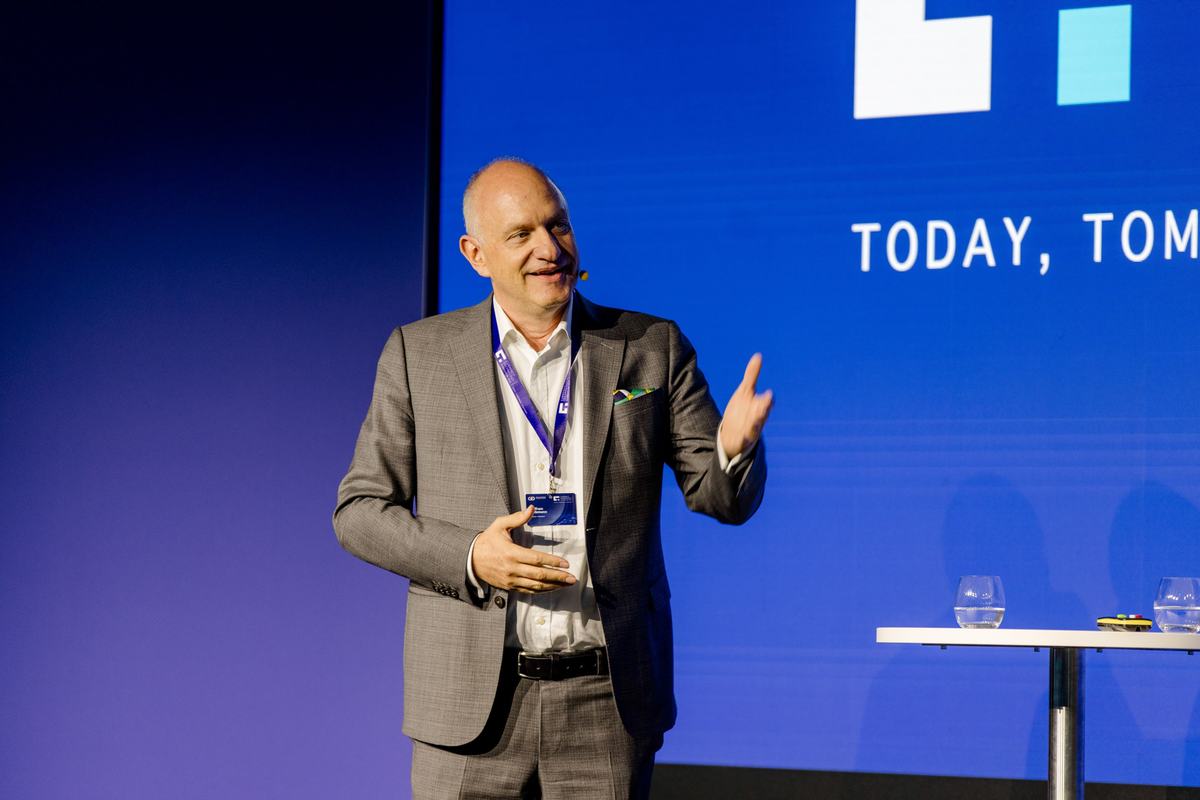
Giesecke+Devrient (G+D) held its Currency Technology Symposium 2023 in July in Munich. Normally a biennial event, this is the first to be held since 2019 due to COVID, and was attended by more than 300 customers from central banks, printworks and commercial cash handling industry.

The big themes of the symposium were sustainability, hyper-efficiency, resilience and the future of cash (including the role of Central Bank Digital Currencies).

This article reviews G+D’s latest developments in the first – and in particular its revolutionary new technology for banknote repurposing, the Banknote Fibre Extractor (BFE), as well as the significant work taking place to create banknotes made from sustainable materials.

Turning the rules on their head for repurposing cotton banknotes

The cotton used in a banknote is high value because its fibres have properties that are useful in a wide range of applications. The challenge for almost any central bank has been how to make banknote waste usable and useful. G+D has found a solution that is straightforward, flexible and scalable.

When banknotes are shredded to regular shred sizes, eg. via a granulator, the cutting process severely damages and shortens the fibres, significantly reducing their application possibilities. The starting point was, therefore, to start with the banknotes in their fully formed but unfit state and to work out how to destroy the banknotes while maintaining the cotton fibres.

G+D came up with a process that did not use chemicals or water, but rather shear physics. They launched a solution that extracts cotton fibres by using: 

  • Pressure shear stresses and intense acceleration, shock and impact effects

  • Pressure changes with compression/decompression processes

  • Air turbulence/micro turbulence due to high circumferential speed.

Unfit cotton-based banknotes go in one end and fibres come out at the other. These fibres can be briquetted so that they are easy to transport and then to use in subsequent end use processes. Briquetting is achieved by exactly the same equipment as is used today for conventional briquetting. Additionally, one big advantage of banknote fibre extraction is the fact that destruction/ decomposing and ready-to-reuse-preparation of the material happens in one process step.

The fibres can then be used in almost any other paper products, to date mainly in cardboard, as well as moulded products, cement additives etc. If the low levels of plastic in the briquettes from threads and foils are a concern for whatever the end product is, many of them can be extracted right at the decomposing process or can be removed in the downstream paper making processes.

These fibres are usable by any recycling company. They don’t need specialist recyclers and the solution is, therefore, globally applicable, offering convenient integration and resource savings. In Germany the market price paid for this material can be up to €100/tonne (July 2023), suggesting that what was once waste now has a real market value.

G+D is working to bring this equipment to market in Q2 2024. It is devising how to allow it to work online with banknote processing systems – but there is already work in progress.

For once the marketing slogan, ‘Small fibres – big effects – real value’, may prove to be accurate.

Manufacturing and product sustainability

Sustainable design principles for any industry include concepts such as:

  • Using renewable resources

  • Designing for targeted durability

  • Using non-toxic and recycled material wherever possible

  • Designing products to have a commercial ‘after-life’

  • Manufacturing with energy efficiency (use less energy, generate your own electricity, buy sustainable energy, offset in the short term) 

  • Measuring the product’s carbon footprint.

G+D has applied these principles for some time but presented two of its latest pieces of work in this area – the Green LongLife™ banknote and the use of sustainable materials.

Green LongLife™ Banknote

When G+D carried out its Product Carbon Footprint (PCF) analysis, the concept of and need to produce a product that not only used a renewable raw material, but which was also bio-based rather than fossil-based, became apparent.


A highly durable product would create a lower PCF in the cash cycle. A product with a high bio-based content (BBC) score would use less fossil raw materials and be more easily repurposable.

It has thus developed the Green Banknote, based on Hybrid ADDvance® which is both durable and contains sustainable cotton. The Green Banknote has an even lower carbon footprint than Hybrid, and 29% less carbon dioxide emissions than typical polymer banknotes.

It is now applying the principles to its new Green LongLife™ banknote, which has a long life, twice that of standard cotton, and a high bio-based content. The Green LongLife banknote consists of: 

  • 100% certified organic cotton

  • Soil repellent paper coating based on renewable raw material

  • Fluorescent fibres made from sustainable wood pulp

  • Mineral oil-free use of Simultan inks

  • Transfer foil with 70% recycled content (Galaxy® thread and RollingStar® LEAD Mix)

  • TOPnote® varnish.

If a LongLife banknote has 8.3g CO2, the new Green LongLife has a carbon footprint of 6.1g CO2, 30% less.

Sustainable materials

While cotton is a renewable material, Louisenthal presented a range of alternative materials that can be used with cotton.

This session started by noting that from the first European banknote in 1661, banknotes were made of hemp or flax. Only in 1918, when these materials were hard to get due to their use in the World War 1 armies, did the US start to use cotton in banknotes.

The materials considered were hemp, flax, wood pulp, abaca, organic cotton and standard cotton. The relative strength of each was assessed against four criteria – their sustainability, social responsibility, technical benefits and availability.

Of these materials only abaca is not widely available, although organic cotton is also in relatively short supply, albeit with a significant growth outlook. Wood pulp reduced paper strength, which is not critical in Hybrid composite substrates. Hemp, flax and abaca scored highly on social responsibility because of their high value for farmers.

G+D is exploring how these materials can be used more widely.

Fundamental and incremental change

The sustainability work presented at the symposium mixed incremental and revolutionary change. Using sugar cane in binders or introducing new additive materials to cotton are examples of steady change. Re-working the Green Banknote shows a re-thinking of the importance of being bio-based. The BFE process offers a revolution at the end of life for banknotes.

All of which, are good for our planet.


Reviews of the hyper-efficiency and future of cash themes of the Currency Technology Symposium will feature in subsequent issues.

Subscriber content

Read the full article

Full access to Currency News articles, newsletters and archives.

Sign Up to Currency News Weekly

Receive regular updates on the latest news and articles posted on our website.