
Counterfeit Corner

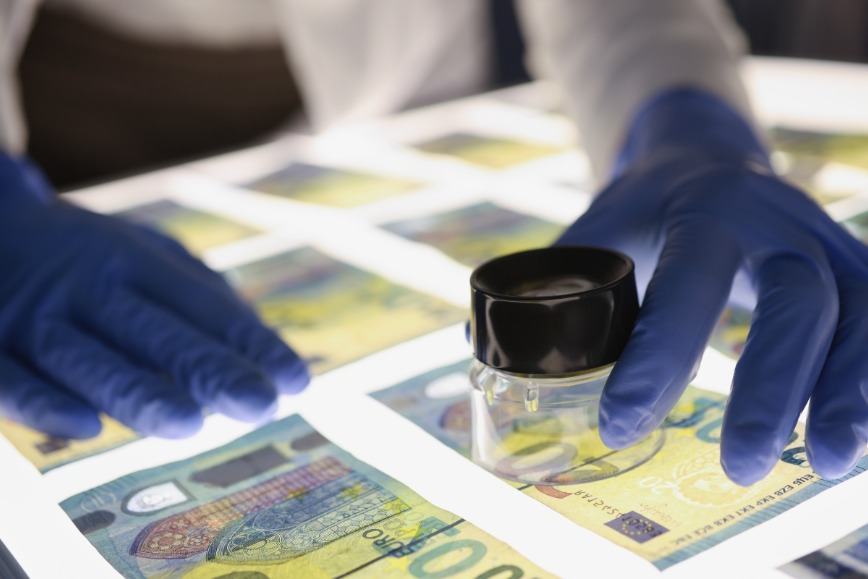
Why do so many shops rely on the counterfeit detection pen to authenticate their paper banknotes?
First, let us look at how the pen works.
The pen contains a liquid iodine solution that is a yellow-orange colour. When this solution comes into contact with starch, it turns dark blue/black. Genuine paper banknotes do not contain starch, whereas regular copy paper does. The solution is absorbed into the paper and reacts with the paper, not the inks. If a genuine banknote is marked with the pen, it should leave a faint yellow colour. The pen will leave a black mark on an uncoated paper counterfeit.
However, there are several problems with this method of authentication.
1.A genuine banknote may pick up starch during circulation, for example if it is washed in a detergent containing starch, or has absorbed grease from food. In this scenario, the genuine banknote is assumed to be counterfeit and refused.
Subscriber content
Read the full article
Full access to Currency News articles, newsletters and archives.