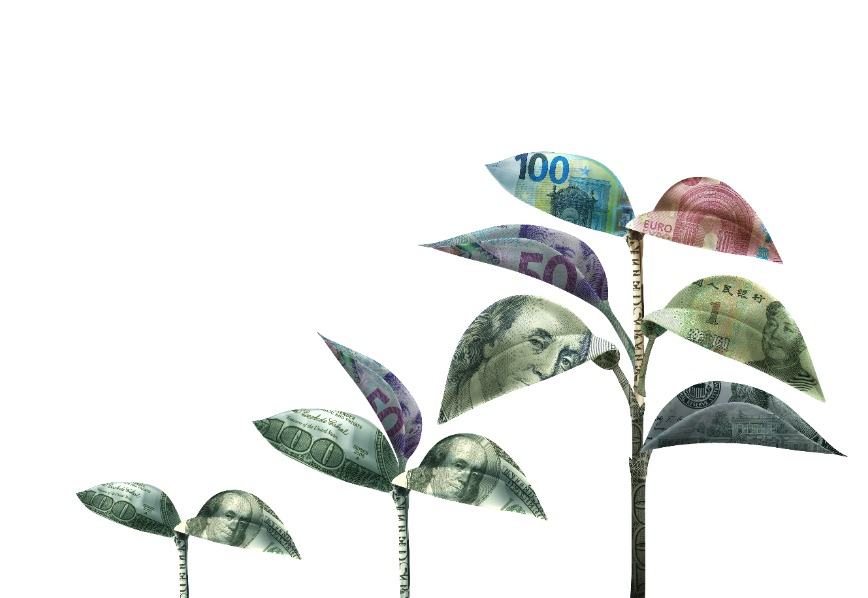
Cash As Part of a Sustainable Future Payments Mix
The UK was the first major economy to pass laws for net zero carbon emissions by 2050 and has cut emissions by more than 40% since 1990. It’s also committed to reduce its emissions at least 68% compared to 1990 levels – this is the fastest rate of reductions from a major economy to date and will help contribute towards the international goal of limiting the global temperature rise to below 1.5°C.
Later this year the UK will host COP26, the 26th United National Climate Change Conference. At the summit, delegates including heads of state, climate experts and negotiators will come together to agree coordinated action to tackle climate change. The occasion of COP26 will generate discussions and debate that will constructively challenge our thinking and provide opportunities to emphasise the critical role of cash as part of a sustainable payments mix.
This past year has seen representatives of the cash cycle also come together to agree coordinated action. The ICA’s Sustainability Charter was established in 2020 and has been followed by other initiatives, such as the UK’s Cash Environment Charter. This month also saw the representatives of De La Rue, CCL, Oberthur Fiduciaire and G+D talk about the initiatives that became finalists for the IACA 2020 Excellence in Currency Award for Best Environmental Sustainability Project during IACA's webinar on ‘Environmental Sustainability in the Banknote Community’.
As an industry we are talking about sustainability more, sharing metrics more transparently and setting more ambitious goals. As an example, De La Rue is committing to ensuring our operations are carbon net-zero by 2030.
As an industry there is more we need to do to ensure the relative impact of different ways to store value and transact. Cash risks falling victim to the misconception that it is physical and therefore bad, whilst it is assumed digital payments come without a cost.
The reality is that every way we pay and store value has some type of environmental impact. There are also certain advantages of cash linked to its physical nature; you can store it for years (decades even!) without any energy being used and a banknote can enable thousands of transactions once it is produced. Polymer and paper notes can go on to be recycled at the end of their useful lives.
All banknotes require different raw materials to those used for the computing and phone-based infrastructure that supports digital transactions and the renewable energy infrastructure. 85% of the environmental impact of a smartphone is due to the precious metals and other materials making up that phone, which is significant because smartphones are replaced every two years on average. Smartphones serve purposes beyond payments, which is just as well because they would otherwise be a very high impact tool for payment.
The overall impact of banknotes is relatively low and the impact is predominantly spread over the raw materials making up the physical note and the transportation of the banknotes in the cash cycle. Having cash in the payments mix helps avoid a future where every method of payment is growing and competing for the same raw materials. Last month a global shortage in computer chips was reported to reach ‘crisis point’ with implications for businesses and beyond, highlighting the risks if there isn’t diversity in ways to pay.
From a sustainability perspective, energy usage is another factor to consider because it risks growing exponentially, with renewable energy unable to keep up with demand. Quantifying the risks associated specifically with digital payment growth is challenging because data and reporting is opaque for digital payments. What we can evidence is that data centre energy consumption was tripled between 2010 and 2020 (from 159.3MT-CO2e to 494.9MT-CO2e) and the growth of digital payments will have played a role.
What we can also evidence is that Bitcoin has grown to have the energy consumption of a small country with relatively little challenge and relatively little news coverage given how significant this is. Whilst Bitcoin is not directly comparable to digital payments and uses a disproportionate level of energy compared to other digital payments (we assume), it serves as an interesting proxy for how digital payments energy use could grow unchecked.
The figures below attempt to provide a little bit of context for the relative environmental impact of things. The absolute high impact of smartphones is driven primarily by the precious metals used in the phone and the frequent upgrades to new phones. The Bitcoin energy consumption is particularly notable when considering per capita, as the number of users of Bitcoin is relatively low. In contrast banknotes have the lowest absolute impact, whilst being used and accessible to nearly every person in the world.
So one reason that cash is important is because it ensures that the payments system doesn’t evolve to have single sources of failure and because it provides resilience by diversity.
It’s also important because it has a functioning global infrastructure already in place, serving most people around the world. It does this whilst having a relatively low impact on the environment.
The groups forming and charters being discussed suggest that the industry will continue to work together to reduce our environmental impact further. We should also coordinate and build messaging that helps set the benefits in the context of the overall payments mix.
Subscriber content
Read the full article
Full access to Currency News articles, newsletters and archives.