The ICA – An Opportunity to be a Force for Good
The International Currency Association (ICA) was founded in 2016 to create a single, cohesive voice for the currency industry. Its principal objective has been, and continues to be, to make the case for cash as a public good at an industry, public and political level, and to demonstrate that cash is a vital part of the present and future payment landscape.
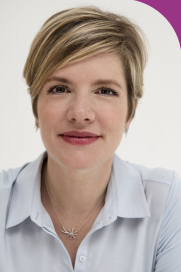
In April last year it appointed a new Director General, Jutta Buyse, who joined just as the pandemic was taking hold, throwing up huge challenges for cash production and distribution as the world went into lockdown, but also resulting in a fierce debate, and misinformation, about the safety, and even future viability, of cash itself.
Currency News™ spoke to Jutta about her impressions of the cash sector and of cash, how the industry has coped with the challenges caused by the pandemic, and what the ICA’s plans are to fulfil and expand its role as the voice for cash.
Q: Tell us a little about your background and how you came to join the ICA.
A: I started my career as a trainee with the European Commission, and then became a consultant, advising and helping associations and companies with European policies and how they are affected by them. Prior to the ICA, I had a very long spell at the European State Lotteries Association. When this opportunity came up at the ICA it was the right time to leave, and I joined in April 2020, which was great timing!
I really enjoy working with associations because they are about people and companies getting together to see how they can collectively achieve more. That’s a unique setting where you’re working at a high level of strategy, which is I think unmatched by other types of formats.
Q: What were your first impressions of the cash industry? And how have you found doing this job with the global pandemic going on?
A: I was really surprised when meeting everyone to see that they know each other so well, even though the association as such has only been around for a short time. The strength of existing relationships certainly helped my transition into this role.
My first impression of the sector, meanwhile, is that there’s an enormous trust placed by central banks in the suppliers, and what has become evident over the last year is that the sector is always 100% functioning and operational. This has been particularly demonstrated during the pandemic, which saw supply of cash go up to meet increased demand and guaranteed delivery at all times.
Having business continuity plans in place in advance and then being able to adapt to them very quickly has worked well for the sector. And it is because of this resilience that it is so trusted by central banks.
Q: Can you elaborate on how the pandemic has affected the sector, and the practical measures that it has taken?
A: I have inquired with our members on their experiences in the pandemic and from their responses, three key areas came to the fore with significant impact that have had to be addressed.
First has been the global supply chain impact. There have been major increases in the cost of raw materials, fewer freight services, higher transport and storage costs. All of these challenges have been mastered, though it is suppliers that bore the brunt of higher costs across the board – materials, production, storage and delivery.
Second have been operational impacts. Special measures have been taken to ensure workplace health and safety, in particular in the area of production. These have included changed shift patterns to minimise contact and allow cleaning between shifts; redesigned site layouts to help maintain physical distancing – boards, barriers, different flows, clearly segregated seating areas etc.; quarantine for travelling staff such as those involved in maintenance; and innovation to replace in-person contact with virtual forms of connecting.
And third have been emotional and psychological impacts. People are very important in this sector: the ICA members can all pride themselves on high retention in their workforce, with many having long careers within the member companies. So the well-being of the workforce in our sector is of the utmost importance.
There were challenges for staff members with elderly parents to look after, or having to home school children whilst working and, in some cases, even both. For others, working from home initially could pose a challenge when their home environment was isolated or not conducive to working effectively. Companies have put in place accompanying and mitigating measures to deal with these impacts.
The consequences of these impacts, and what they have shown about the sector, are fourfold.
First has been the aforementioned business continuity, integrity and industry resilience in meeting the heightened demand under changed circumstances during the pandemic.
Second is the importance of strong communication internally as well as with clients and suppliers.
Third are the significant ongoing financial costs to the industry.
And fourth is the demonstration of the agility of the industry – with the pandemic providing new opportunities for optimisation and innovation.
Q: What role has the ICA played in trying to mitigate against misleading publicity against ‘dirty’ cash that would transmit the virus?
A: We sought to debunk the misinformation where we could, and collected public statements regarding the spread of the virus via cash, prepared talking points and shared this with all of our members.
We worked together with all the marketing and comms experts of our membership and shared various studies that were out there.
Where necessary we came out very publicly and issued debunking statements in forms of letters to the editors and press releases in reaction to false claims and our chairman. Wolfram Seidemann, has been very vocal on this issue.
"Associations are about people and companies getting together to see how they can collectively achieve more. "
Q: Do you have a plan going forward to continue to push out the message that cash is safe?
A: Yes – absolutely, this message forms an ongoing part of our communication outreach, particularly on social media where false claims can quickly gain traction! And I’ll take the opportunity here to reiterate that cash is safe!
Q: Tell us a little about the ICA and what it does.
A: The ICA was set up to be a voice for the currency industry, so it brings together the companies involved in the production of banknotes and coins as well as those involved in the various aspects of the supply chain.
In the sector, the ICA is unique because it’s the only association that encompasses the full industry and companies who, at the same time, are very diverse. A number are also involved in other sectors, and there’s a big overlap with different aspects of high security printing. The ICA exists to bring these members together and provide a platform for exchange and for voicing their priorities to policymakers and stakeholders.
I think it’s important to be there where the discussions are taking place, because you can see how various jurisdictions influence each other; the ICA was established to be the voice of the global industry in such discussions.
For example, there’s an important access to cash discussion in the UK at the moment, and so the ICA needs to be part of that because other countries will be looking at the UK to see what happens.
As another example, anything that happens in the European Union, which is a big trading bloc, risks being picked up by others – so if a €10,000 limit on cash payments goes ahead, it might unfortunately be an inspiration for others.
Q: How receptive are central banks to the ICA and to what you’re saying?
A: Centrals banks are very interested in seeing how the association develops and there is particular interest in the work we do around sustainability. I think if you look at it from the central banks’ perspective, they are looking at an association where these producers get together and develop new routes to make cash better overall.
Q: How does the ICA interact with other industry organisations?
A: We have many parallel associate memberships agreements, and that really is an expression of wanting to have an advanced partnership so we show that we’re working towards the same goals. At the European level, for example, we’ve written many letters together with our partners to the European Central Bank and to the EU Commissioner, and also as part of a cash coalition that signed together.
Q: Would you say that the ICA is very euro-centric (in the sense of the continent of Europe, not the currency)?
A: There is a big European presence in the membership and the sector, partly due to historic reasons. I wouldn’t say we’re euro-centric, although we are focusing on policy developments in Europe because there is a lot happening at the moment – both at the European Union level and in the United Kingdom. We’ve seen from other sectors that sometimes what happens in Europe then spreads to other places.
We also work with the Consumer Choice in Payment Coalition in the US that is supporting legislative action and various initiatives in cities such as Philadelphia or San Francisco, where measures are in place whereby local retailers now have to accept cash.
We also conduct outreach with a more global remit. We’ve previously written to the United Nations to attack the false claims that have been made on cash and COVID.
Cash Matters, which runs the awareness campaign on cash through social media and a website displaying facts, figures and news about cash from around the world, is a committee of the ICA. Cash Matters has excellent results in terms of viewership and is becoming a leading voice providing information on cash and cash developments on a global basis.
And then there is the Global Currency Forum, our conference which will now take place next May, and which is very much a forum for participants from all over the world. There’s certainly a lot of scope left to engage more in Asia and Latin America because a lot of pro cash initiatives are happening there.
Q: What do you see as the major challenges facing the cash industry?
A: Access and acceptance, but you could say that acceptance is strongly influenced by access. It’s about making that fit for the new century, so coming up with new ways of giving everyone access, new ways of distribution and of combining digital and physical cash.
We have to go beyond this thinking of either digital means of payment and distribution, or cash. There’s the opportunity for the two to support one another – for example, in the way that you can order your cash online and get it couriered to you.
One of the main goals of the ICA is to share the good news about the good value that cash is. The difference is that we’re not selling cash to consumers, yet cash is the most dominant form of payment.
To a certain extent it sells itself, and we need to work with policymakers and ensure that the opportunity to use cash is there.
As was said recently within the framework of the UK Access to Cash discussions, when we look at Sweden we can see what happens if you act too late and neglect the infrastructure that needs to be in place so that people can pay with cash and access their cash. It’s far more difficult to build it up again than if you had been careful from the outset.
"We have to go beyond this thinking of either digital means of payment and distribution, or cash. There’s the opportunity for the two to support one another. "
Q: What do you think needs to be done sustainability-wise?
A: We need to work to make the best and most sustainable cash possible and as an industry we need to continue to innovate towards achieving this goal. The ICA Sustainability Charter shows the commitment of the global industry to this end.
Our vision here is that we have the actions of the individual members to improve their sustainability, and then we have the improvement of the sustainability of the entire cash cycle. We want to use the ICA as a platform to learn from each other, to forge partnerships to improve the full sustainability of the cash cycle, and to support others with the same goals with the sharing of data and information to accelerate change.
However, if we talk about sustainability we’re not only talking about the environment; we’re also talking about the role cash plays in ongoing economic and social development as well.
If we look to the United Nation Sustainable Development Goals, the ‘SDGs’, there are goals beyond the environmental ones where cash certainly plays a role because of its universal accessibility. This is directly linked to social inclusivity and community resilience – and thus cash can contribute to the SDG Goal 10 – Reduce Inequality – and Goal 11 – Make cities and human settlements inclusive, safe, resilient and sustainable.
You could also argue that the privacy characteristic of cash can help protect vulnerable women and thereby contributes to the UN SDG Goal 5 – Achieve gender equality and empower all women and girls.
Cash is the only means of payment out there that is free to use for anyone and so it contributes to the full emancipation of people to be able to partake in economic exchange in daily life.
In particular, it plays an important role in protecting the most vulnerable in our society – the unbanked and under-banked who face further exclusion in society if the cash infrastructure, which supports access to cash and cash acceptance, diminishes. In this way, cash is a big part of sustainability solutions more broadly speaking, and we need to ensure it can continue to play this role as a public good for society in the future.
Q: What is the ICA doing to make the political case for cash?
A: The case made by the ICA is that cash is a public good and it needs to be protected as such. Everything needs to be done to protect access to it and availability of it. This is a message reiterated across all our activities and initiatives, including the Cash Matters campaign.
The biggest champions of cash are the people who are using it everyday. People vote with their feet and also with their cash withdrawals.
Q: What view does the ICA have of CBDCs?
A: Whilst our primary focus is on protecting access to and availability of cash, as an industry association it is important that we are part of the discussions taking place on CBDCs because they are part of the future payments landscape.
A central bank digital currency is far closer to us because it will be a public currency. What we are really looking at is how a digital currency and physical cash can co-exist and what central banks can do to make sure they coexist in the best way possible.
To this end, we participated in the consultation on a digital euro from the European Central Bank, we’re going to participate in the Bank of England consultation and we are open to participating wherever similar opportunities arise to make our views heard.
Q: You referred earlier to the Global Currency Forum next May. What are its themes and what are you hoping to achieve with the conference?
A: The Global Currency Forum really wants to engage the full sector that is the force behind cash, whilst also breaking down barriers and talking to people outside the industry about the general values and impact of cash.
We will be talking, among other topics, about sustainability, the cash of the future and cash as a public good.
Q: 16 months into the role, do you have any regrets?
A: Although the ICA works very well on the various conference calls, I wish I could have been able to meet with many more people from our membership in person. Ours is a complex sector where so many people know each other already and have known each other for a long time. When I’m able to have an in-person meeting and that in-person connection with someone I notice the difference that it makes, even for the working relationship you establish afterwards.
So that is my only regret. Other than the limitations on meeting people, which has affected us all, I have no regrets. It’s a great organisation, and a great opportunity to be a force for good.
Subscriber content
Read the full article
Full access to Currency News articles, newsletters and archives.