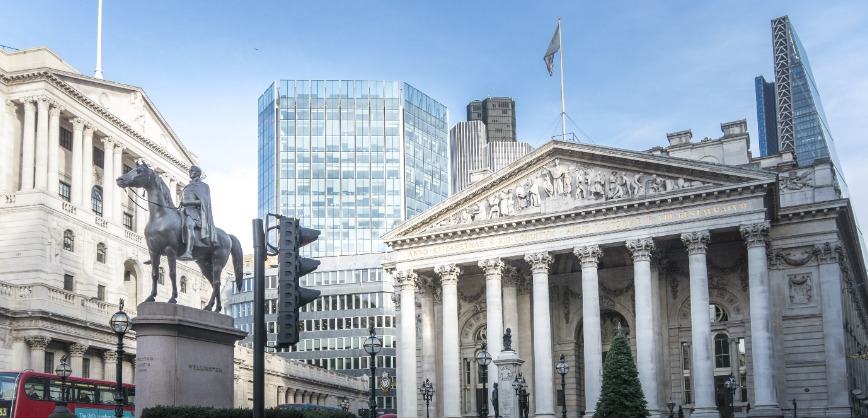
The Bank of England – Planning for the ‘New Normal’
Cash in the UK is in an interesting place at the moment. The cash paradox – higher demand, lower use – is very much in evidence, as are growing concerns about the future of cash allied to branch and ATM closures, concerted moves from the government downwards to encourage people to pay digitally, and what the cash infrastructure could and should look like in the future.
The Bank of England, like other central banks, is neutral on the matter of payments, but nevertheless supportive of choice in how people pay, and supportive of maintaining access to cash for those who need it. At the same time, it is busy contending with maintaining services during the pandemic, moving towards more sustainable cash and undertaking the transition of the country’s banknote to polymer, which was completed on 23 June with the issue of the new £50.
Currency News™ spoke to Chief Cashier Sarah John about these and other challenges and the next priorities for the Bank of England’s Note Directorate.
Q: First of all, can you give a brief summary of your background, career to date and how you ended up where you are now?
A: I joined the Bank in 1999 as a graduate and I’ve worked in a variety of roles since then. I started in statistics, but I’ve spent a lot of my career working in the markets area, in particular implementing policy operations. I joined the Notes Directorate as Chief Cashier in 2018, so I’ve been doing this now for about three years.
Q: There appears to be quite a difference between what you did before, and cash. So what attracted you to the role of Chief Cashier?
A: All the roles I’ve held at the Bank have had a very large operational element. Notes are really at the extreme end of that spectrum, but a lot of the skills that I have learnt throughout my career at the Bank are actually very relevant for being Chief Cashier.
Ultimately, we’re trying make sure that people have banknotes they can use with confidence, but a huge amount of that is having to think about the policies that we set, for example, for how those notes circulate and how we interact with the banking system.
Q: Has there been anything surprising or unexpected about this role?
A: Probably just how much is involved in producing and circulating banknotes, and the sheer range of staff with different skills that I have reporting to me. There are roughly 120 people working in the Notes Directorate; it’s a massively talented area, with a huge range of very talented people, and there’s so much that goes on that I don’t think I really appreciated properly before.
For me it’s been a great move. I’ve really enjoyed it and enjoyed finding out about all those different elements of banknotes that I wasn’t aware of.
Q: What have been the biggest challenges for the Directorate in the last 18 months, and how have they been overcome?
A: Obviously a lot of people have been working from home during the pandemic and that’s certainly been true for a lot of Bank of England staff.
But we’ve not yet found a way to run a cash centre out of someone’s living room or from their kitchen table. Banknotes are a very physical commodity and they need storing in a certain way, along with the security, and you can only do that by having staff continuing to come into the office and the cash centres to handle those notes in that secure environment.
We’ve had to work very hard to make sure that we protected our staff throughout the pandemic because cash is a critical part of the national infrastructure. People wanted to be able to go on spending, they needed to be able to continue accessing cash, and we had a very important role to play in making sure that cash was still available for them.
Q: How did the Bank deal with the public concerns of cash being unsafe to use?
A: There’s no greater risk in handling a banknote than coming into contact with many other common surfaces, such as PIN pads or self-service checkouts.
Early on in the pandemic, to give additional reassurance to the public, we commissioned some research into how long the virus was able to survive on banknotes versus other common surfaces and we published the results in our quarterly bulletin last November. The virus lasted for far less time on a banknote than surfaces such as stainless steel, it only lasted for a few hours and, after that it, basically wasn’t detectable anymore.
Coupled with that, we also looked at the environment in which people handle and use banknotes. The way COVID spreads is generally via inhaling droplets or aerosols exhaled by an infected person. If your banknotes have come straight out of a cash machine and gone straight into your wallet or pocket, the ability to get those droplets on them in the first place is much reduced.
We thought it would be very helpful to publish that research to give people the confidence that the risk is very low.
Q: How do you forecast volumes and usage for the future given the recent hiatus?
A: It’s been a period of huge uncertainty and a very difficult period to forecast. The actual value of banknotes in circulation has gone up during the pandemic despite the fact that it’s well reported that transactional use of cash has gone down, which implies that people are holding it as store of value. That shift in the way that people are using cash does make forecasting very difficult to do.
So, what we are going to do now is look at more scenarios, and what might happen to cash under a range of different circumstances and then make informed judgements on how that reflects on the number of banknotes that we need to produce. We place banknote orders every couple of months so we can adjust quite frequently based on the latest information available.
Q: If more notes are being held as a store of value, is it safe to assume that there has been more demand for the historically under-used £50?
A: The growth in notes in circulation has been proven by the £20 note, not the £50. One possibility is that people see the £20 as both a transactional and a store of value note, so it’s a crossover note that does both.
We also think that because people know the paper £50s are being replaced, they build up stores of the biggest polymer note in advance. We saw the same behaviour for the £20 – demand for the £10 note increased before the £20 note came out because people didn’t want paper notes that they knew were about to be replaced.
Q: As we return to normal, where do you think cash will land? What will be the ‘new normal’ for cash?
A: There’s obviously been a shift in people’s preferences about how they make payments. The declining use of cash for transactions and the increase in other forms of payment is not new. I think it’s inevitable that the pandemic, to a certain extent, will have sped up that process.
Having said that, our latest survey in January this year showed that, for 1 in 5 people, their first choice of payment method is cash. There will inevitably be an increase from the levels of cash use that we saw during the pandemic, as the types of activity that people tend to use cash for come back and become a mainstream part of our lives again.
I don’t think that levels will get back to where they were pre-pandemic, but I think we shouldn’t underestimate the fact that cash is still a sought after payment method for a lot of people. People do still choose to use it and that will mean we will still see cash as an important payment method for quite a long time to come.
"We shouldn’t underestimate the fact that cash is still a sought after payment method for a lot of people."
Q: The £50 is the last in the new polymer series. What has been the reaction to the design?
A: It’s been immensely positive, and I think that’s driven by the fact that Alan Turing, the character who appears on the note, has got such an amazing legacy and there is something in his background that everyone can see and appreciate.
For some, it was his work during the Second World War, and decoding Enigma messages, or the early work he did on computing. For others, it’s the fact that he was prosecuted for his sexual orientation and had his GCHQ clearance removed simply because he was homosexual, which brought to an end his career working on those early computers. His legacy is the Turing Law, leading to people being pardoned posthumously if they were convicted under historic laws that outlawed homosexual acts.
There are so many different aspects to Turing’s character and to the legacy that he’s left us, that the reaction to the note has been immensely positive and it’s really blown us away.
Q: Are you hoping that the new £50 note will engender more confidence, and as a result start being used more as a transactional note?
A: There’s a number of reasons why I think people might be more inclined to start using this note. It’s smaller than the old one, and so hopefully it will fit in people’s wallets a little better.
Also, this is part of a family of notes and the security features are very similar for all the polymer notes. So if you can check a £20 note, you can check a £50 note. That wasn’t the same with the old paper series, where it was a hologram on the £20 but a moving feature on the £50.
There are two simple checks you can do on the new £50 – check the see-through windows and the hologram. I’m hoping that people can then become comfortable with checking the entire series of notes and feel more confident to check the £50 note and therefore accept it more.
Also, a number of banks are looking at making the £50 available in ATMs if the demand is there – particularly in those machines where you can choose the denominations that you want.
But it’s also worth remembering that, while people say that it doesn’t circulate that much, and it’s not really a transactional note, about 1 in 13 banknotes in the UK is a £50. I suspect that’s quite a lot higher than most people would think.
Q: With respect to ATMs and dispensing £50 notes, presumably part of your pre-launch has been working with that community?
A: Absolutely. It’s very important to us that it’s able to be dispensed. The £50 is a little bit different to the £10 and £20 precisely because it’s not as transactional, but we still want people to be able to get hold of one easily and use it if they choose to do so.
We’ve had the same engagement with a whole range of different stakeholders, using exactly the same contact base as for the £20 roll out, to make sure that all the different elements of the payment chain are ready.
Q: The UK is unusual in just having four banknote denominations; is there any thought to introducing a £100 note?
A: The choice of banknote denominations is up to the Treasury rather than the Bank of England. They had a call for evidence on this in 2018, asking whether that denominational mix was right, and even wondering whether we still need a £50 note.
The results of that were published in May 2019 and they concluded that the current denominational mix meets the public’s needs, and there’s no change planned for the foreseeable future.
Q: Are you thinking already about the next series?
A: Yes. This is a continuous process for us, to assess new security technologies and to make sure we stay ahead of counterfeiting threats.
New technologies can take some time from inception through to development to industrial scale production. The timelines involved here are several years so, even though we’re not planning to issue another series for quite a number of years to come, we are already working with a range of different people on what that next crop of security features might be.
Q: What impact has the transition to polymer had on counterfeiting levels?
A: Overall, there seems to have been a marked reduction in counterfeiting, but it’s a little too early to declare victory because the most counterfeited note in the UK is the £20 note and we haven’t yet withdrawn the paper equivalent.
The majority of the counterfeiting of the £20 is of the paper design. The rest mainly consist of prop notes, or movies notes, with no security features at all.
That’s not to say we haven’t seen any counterfeit polymer designs. We have and we always expected to, but it’s a very small number and they’re using a clear plastic material. It doesn’t feel the same as a genuine polymer note and the printing quality is a lot poorer than a genuine note.
Counterfeiting rates have dropped dramatically during the COVID lockdown in 2020 and into 2021. We’ve seen a small increase over the last few weeks as retail and leisure has reopened, but the rate is still substantially lower than it was pre-COVID.
Q: The Bank of England is part of the Four Nations Group. Given the four out of the five member nations are polymer users, how and to what extent do you collaborate?
A: There are joint projects that we undertake together because it makes a lot of sense. An example of one of the projects we’ve been working on is a perception study that will help us know what people look at on banknotes, what are their eyes drawn to, what tells them that it’s a counterfeit versus a real note and, from that, which are the features that are working best for the kind of tier 1 checks that people do.
The results of that particular study, which was carried out by the University of Birmingham, are being published very shortly, and some have already been shared with certain parts of the banknote community.
Q: The transition to polymer was predicated on the life of polymer being 2.5 times the life of paper. Has that been borne out?
A: Early signs are that it’s greater. The £5 was the first polymer note to be issued, in 2016, and the paper version used to last about two years. So two and half times would take us to just under the five year point, ie. 2021 which we are only just coming to now. It’s still too early for us to say how much longer the polymer notes are lasting, but all the evidence that we have so far, and the sampling carried out, is that they’re lasting a lot longer. That 2.5 times lifespan does seems to have been a very conservative estimate.
Q: At the end of 2020 the Public Accounts Committee generated headlines about the ‘lost’ billions of banknotes. How did you respond? What are you doing to find the ‘missing billions’?
A: The first thing to say is that these banknotes are not ‘missing’ and we’ve been very clear about that. These banknotes have been issued, but banknotes are being used less in the transactional cycle and more as a store of value. That’s not unique to the UK. It’s something that’s happening globally, but the challenge with banknotes being held as a store of value is that the opportunity to register those notes is a lot lower.
We have a lot of evidence about where notes are in the transactional cycle, but when they’re being held a store of value, it’s very difficult to measure that. There’s no obligation on holders of banknotes to report to the Bank of England on how many notes they’re holding and what they’re holding them for – indeed, that is the whole nature of a banknote.
We’re carrying out more surveys to understand how people’s use of cash has changed and why they might be holding these notes as a store of value. There’s research with households to understand how they use banknotes as a store of value, but importantly we’re also asking small businesses about their use of banknotes.
So, we’re trying to understand both that household and small business usage of cash to build a better picture of where those notes are and why they’re being held.
Q: Would serial number tracking and the granularity of data it provides help your understanding?
A: It’s obviously something that we’re looking at, but there are some quite distinct challenges with going down that route. Serial number data capture potentially gives a lot of very helpful information about those banknotes in the transactional cycle, but it’s not going to give us so much on the store of value notes, and that’s really where we want to focus our research.
As for that research, there will be difficulties getting people to tell us the true value of their cash holdings, so it’s not a perfect source of data. But it probably is the best way that we’ve got to get hold of that information.
Q: The Public Accounts Committee also sought an explanation of why stock levels were so high and wanted information on how you forecast and plan your stock levels. Is that work in progress or are you moving forward?
A: Running out of banknotes would really jeopardise confidence in the currency, so I think that it’s understandable that we hold these significant stocks of banknotes. During the pandemic we have run into our contingency stocks, which is exactly what they’re there for.
However, obviously it’s good practice to review this, and for us to build the experience of the pandemic into the modelling that we do of the stocks that we need to hold and look at whether there’s any lessons that we need to learn.
"There’s no obligation on holders of banknotes to report on how many notes they’re holding and what they’re holding them for – indeed, that is the whole nature of a banknote."
Q: Looking into the utility model on cash sorting – are you able to comment on where that work has got to, or is it too early for that?
A: That work is ongoing at the moment, and the banks that underwrite the wholesale cash market in the UK have been engaged in that work. It’s going through a process of looking at which cash centres would need to be retained in a utility situation, and that’s necessary to understand whether there’s a business case to move forward with that type of model.
There’s not much that I can say about it at the moment, but I think that it is important that we look at those big shifts in the way that we distribute cash because we have seen a big shift in the usage of cash. We need to really think about how to put cash on a sustainable footing going forward, and that means thinking very hard about the appropriate distribution model for those lower volumes of cash.
This transition is happening and we just need to know what the glide path is and what we’re going to be doing about it so that we can plan appropriately and manage that transition in a controlled way.
Q: What’s your view on the progress being made about guaranteeing access to cash?
A: We’re members of the Joint Authorities Cash Strategy Group, and the value of that group is really to make sure that the different initiatives that we’re all leading on join up and make sense for the cash market as a whole.
The main thing we’re focusing on is this work on redesigning the wholesale market. Our involvement in the broader strategy is about making sure we’re doing what we can to support those initiatives at the retail end and vice versa.
Q: Where is the Bank on helping the cash system reduce its environmental impact?
A: We’ve been doing a huge amount within the Bank on this over the last few years. As part of the move to polymer we asked the Carbon Trust to evaluate the carbon footprint of polymer versus paper notes. We were very pleased to see that, over the full lifecycle, the carbon footprint of a £5 polymer note is 16% lower than a paper one and 8% lower for a £10 note, and that’s because the notes last longer.
We also put into place recycling for those polymer notes, so when the notes come back to us at the end of life they’re ground down, made into pellets, and then remade into items like plant pots and crates. So the full lifecycle of a note doesn’t end with those notes going onto landfill – they’re actually recycled into other useful products.
We’re also working with our suppliers to try and make sure that we’re doing what we can to reduce carbon throughout the supply chain. Both our suppliers have committed to carbon neutrality for polymer that will be used for the £50 banknote, and in recent tenders we’ve also secured carbon neutrality for the future contracts of polymer for all our banknote substrates.
In the UK the cash industry has been working together to look more generally at the environmental friendliness of the cash chain, and that’s both looking at the carbon footprint of things like ATM electricity, but also the use of single use plastics within cash centres which are often used to wrap notes. A massive amount of effort is going into making the banknote lifecycle as environmentally friendly as possible.
Q: Apart from getting out and going to the pub again, what are you most looking forward to in the coming year?
A: It’s such an interesting time in the cash world at the moment, with a number of challenges. I think it’s going to be a very exciting year as that whole access to cash piece moves forward and as we emerge from the pandemic.
We are going to need to make quite significant progress in thinking about how we protect access to cash in the future. As we start to understand how cash is going to be used going forward, we can make sure that we’ve got the right initiatives in place to support access to cash for people who want to use it.
Subscriber content
Read the full article
Full access to Currency News articles, newsletters and archives.