
· 3 min read

Healthy Indoor Environment for Banks and Banknote Processing

Astrid Mitchell
Astrid Mitchell · Editor
Healthy Indoor Environment for Banks and Banknote Processing

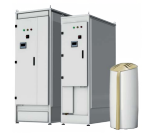
Royal Dutch Kusters Engineering (Kusters) – which specialises in banknote destruction systems - has expanded its portfolio with its new range of Air Purification systems, in response to the importance of a healthy indoor environment in offices and cash processing areas.
As Kusters explains, various sizes of particles float through the air both outdoors and indoors, and the smaller they are, the more difficult it is to filter them out. The smallest particles have a diameter of less than 1 micron and include dust, combustion particles, bacteria and viruses. Because they are so small, they penetrate directly through the lungs into the circulatory and nervous systems, reaching internal organs where they can cause considerable damage.

Regarding dust particles, machinery in processing areas often incorporates filters to extract particles larger than 1 micron. But virus and bacteria particles are smaller than that, and so remain in the ‘cleaned’ air. For these areas, Kusters recommends its HEPA filter, which can easily be retrofitted onto most existing banknote processing and destruction systems.

Offices and other non-operational areas, on the other hand, depend on the use of (mechanical) ventilation systems, which extract the air from outside into the room and vice versa. Although the air is circulated and so presents fewer health risks, all particles remain in the air. Air conditioning and air treatment systems can solve this problem. With this in mind, Kusters is recommending its new Air Purification Systems, which are based on what it says is a unique, patented air ioniser technology.

One of the advantages of the devices is that they are filter-free. Instead of filters, the system uses negatively loaded ions to create an ionic field and flow. The ions attach to the contaminated particles and are then blown against the inner walls of the device. The ions attack and impair the cell walls of viruses and bacteria, causing them to die. The cleaned air is then ready to be blown back into the room.

The device cleans itself by rinsing the inner walls with a mixture of water and detergent. A separate tank will collect the water. Since the residue is harmless to the environment, the tank can be emptied without any concerns.

This technology has been formally tested by various research institutes and have shown the Air Purification series purify over 99% of nano-sized particles in the air. They also confirmed that the systems also kill bacteria and viruses.

Kusters cites a number of benefits of its Air Purification systems – they work as stand-alone air purifiers (on the play and play principle); clean nano-sized and ultrafine particles (PM1), including viruses and bacteria; maintain a consistent performance level, thanks to their unique air ionizer technology; and clean themselves with a water-based residue (no secondary waste is generated).

Furthermore, they have low power consumption, are ultra-quiet and, because there is no need to purchase filters, they reduce operating costs.

According to Kusters, it has recently sold multiple system to central banks in Asia, thereby contributing to fighting the pandemic by ensuring that organisations have a safe working environment, in both office and processing areas, free of viruses and bacteria.

Subscriber content

Read the full article

Full access to Currency News articles, newsletters and archives.

Sign Up to Currency News Weekly

Receive regular updates on the latest news and articles posted on our website.