
· 4 min read

Sustainability: A Part of Life at Australia’s Banknote Precinct

Astrid Mitchell
Astrid Mitchell · Editor
Sustainability: A Part of Life at Australia’s Banknote Precinct

Sustainability as a concept has been best defined by the United Nations Brundtland Commission as 'meeting the needs of the present without compromising the ability of future generations to meet their own needs'.

Supporters of polymer banknotes argue that their development created a product that could significantly extend note life and be 100% recyclable at the end of its life. Note Printing Australia (NPA) and the Reserve Bank of Australia (RBA) have recycled 100% of polymer production waste and unfit banknotes for the last 20 years. The lower carbon emissions associated with the extended note life are claimed to be benefits that central banks need to consider as sustainability moves up the governance priority list.

In countries like Australia where recycling is a mature activity, the recycled plastics manufacturing industry is able to produce useful products that replace the use of primary natural resources. For example, recycled polymer planks, which can include recycled banknotes, are being sold to local councils around the nation for use as walking tracks along coastlines or in rainforests. These recycled polymer products are estimated to last 40-60 years and, based on current recycling technology, can be melted down and remanufactured a total of three times. Thus, polymer banknotes can be part of a truly circular economy.

The Bank of Canada’s Life Cycle Assessment on Canadian polymer banknotes and the paper $20 included research on measuring the Natural Capital Value of recycling, landfill and waste-to-energy as end-of-life solutions for unfit banknotes. This research focused on financial measurement as a way to value environmental benefit, and what the study showed was that recycling polymer banknotes delivered a natural capital profit of C$219 per metric tonne of banknotes. By contrast, banknotes that are being briquetted and burned for energy-to-waste generates a natural capital loss of C$204, or in the case of landfill delivers a natural capital loss of C$13 per tonne.

According to CCL Secure, these findings corroborate the value of a mature recycling system that incorporates polymer banknotes, that is, where polymer waste can replace the use of natural resources, our environment benefits significantly.

Benefits of one site: Craigieburn

Having both CCL Secure as the substrate supplier and NPA as the printer located in the Craigieburn Banknote Precinct has created production sustainability benefits, the most obvious of which is fewer transport related emissions between the creation and printing of the polymer substrate (see CN October 2022).

NPA and CCL Secure have worked as partners with the RBA to achieve common sustainability goals for the site. As a result, the site’s Restaurant Associates who manage the staff cafeteria are working to promote initiatives such as eliminating single use plastics and, in order to support biodiversity and low emissions food, introducing beehives which will provide staff with a truly local honey supply. A community garden to grow vegetables for use in the staff cafeteria is also being constructed.

NPA’s sustainability focus

NPA has based its sustainability work on the UN Sustainable Development Goals (SDGs) as recommended by the World Business Council for Sustainable Development. NPA joined the Business Council for Sustainable Development – Australia in 2020 to keep up with the latest thinking and events in sustainability.

NPA‘s sustainable work is linked to 12 of the 17 UN SDGs. Within this framework emissions, energy, and waste are first amongst equals and one of its earliest initiatives was to measure its Scope 1,2 and 3 carbon emissions footprint for the 2018-19 production year (on the basis that this was the last normal year of production before COVID).

NPA also developed a calculator that enables it to determine emissions by denomination printed. This includes a breakdown of the various contributing factors including base operations, grid electricity, substrate, ink, and foil (if applicable).

NPA is working with its supply chain to encourage and support their emissions reduction activities. It changed its waste management contractor to work with a supplier that proactively assisted it to improve its waste management practices in diverting waste to landfill.

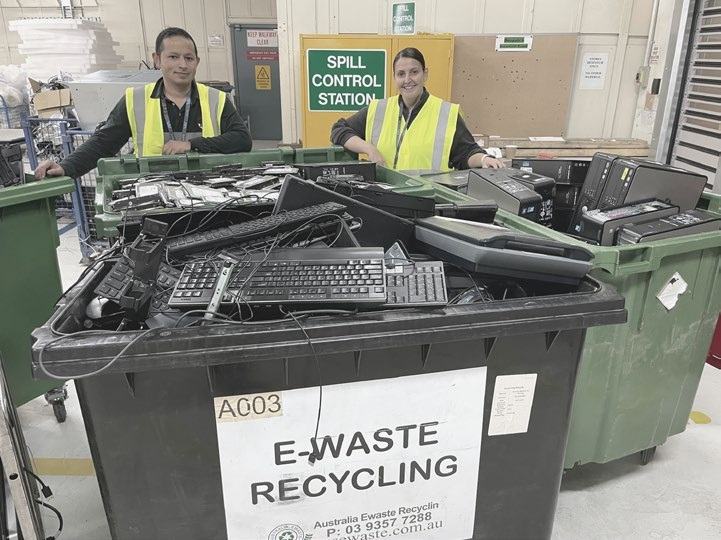
NPA achieved a major milestone in 2022 with the elimination of e-waste from its operations. This involved disposing of accumulated e-waste hardware that was being stored on-site, including 150 mobile phones, and some 600 monitors and keypads. These were either recycled or repurposed. NPA now leases all technology hardware and suppliers must have a sustainability strategy in place to ensure the ongoing useful life of the equipment.

CCL Secure’s sustainability focus

CCL Secure’s sustainability work is based on an Environmental, Social and Governance (ESG) programme. As part of this, CCL Secure states that it takes into account ‘social capital’ by, for example, creating a safe environment for its employees, providing good working conditions, promoting equality and diversity, investing in training, developing skills and helping staff understand the importance of moving towards one goal.

CCL Secure is targeting carbon neutrality for all three of its sites by 2030. Each one has measured its emissions in accordance with the GHG Protocols to the BSI PA2050 standards. CCL Secure is optimising its own processes and, to ensure its energy saving initiatives are implemented, is carrying out energy audits working with recognised external experts. This includes improving energy efficiency in the production lines, lighting systems and heating, ventilation and air conditioning systems in part based on feedback and suggestions from its own employees. CCL Secure is working towards Science Based Targets.

CCL Secure’s commitment to sustainability was recognised and awarded in 2021 by Central Banking Currency Services category for its global support for recycling and for wider reductions in its environmental impact.

Erratum

In November’s edition of Currency News™, the article ‘Energy Management Award for CCL Secure’ contained a mistake. CCL Secure achieved a 31% reduction in energy consumption, not a 3% reduction as stated. Our apologies.

Subscriber content

Read the full article

Full access to Currency News articles, newsletters and archives.

Sign Up to Currency News Weekly

Receive regular updates on the latest news and articles posted on our website.