
In Other News…
The Reserve Bank of Malawi has issued a new high denomination 5,000 kwacha banknote, to relieve pressure on the 2,000 kwacha, which accounts for 80% of currency in circulation. An upgraded version of the 2,000 will also be issued shortly.
The 5,000 kwacha features an image of the former president, Hastings Banda (who also appears on the 1,000 kwacha), on the front, along with a registered diffractive stripe and SPARK® Live in the shape of a fish. On the reverse is a 4mm wide RollingStar® security thread.
The South African Mint has won in the Best Circulating Coin category at the 2022 international Coin of the Year Awards (COTY) for the SA25 R2 coin commemorating the ‘right to freedom and security of the person’, as enshrined in the South African Bill of Rights.
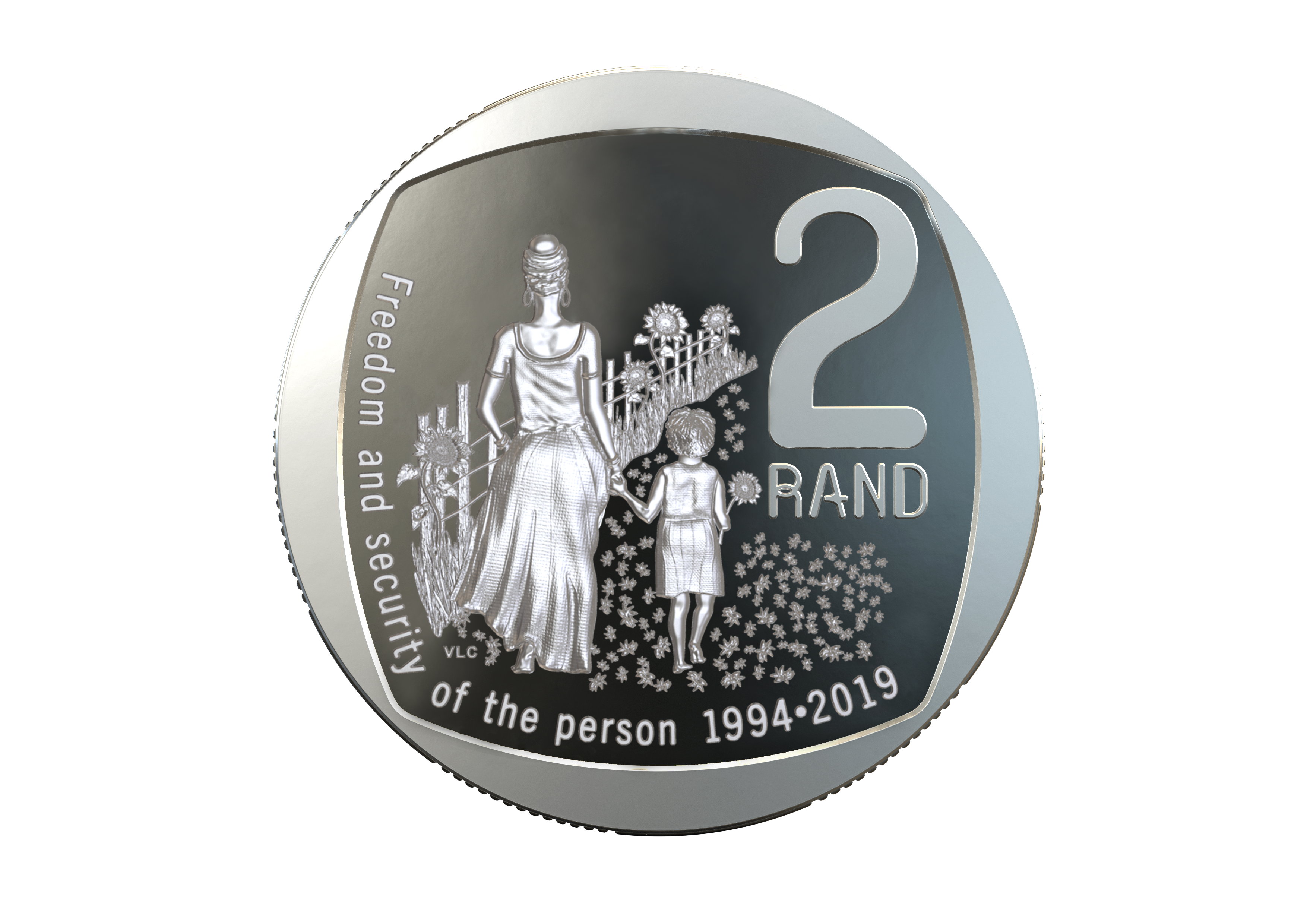
The commemorative circulation R2 coin depicts a mother and daughter walking freely in nature on the reverse, and is the result of a national competition held at the end of 2019 calling on all South African to submit designs featuring their choice from the Bill of Rights that had not been featured on the 2019 SA25 commemorative circulation coins. The winning design was submitted by a local graphic designer, Esta Quirk.
The Central Bank of Azerbaijan has issued a new 20 manat (AZN), the latest in its new family of notes which has already seen the introduction of new AZN 1, 5 and 50 notes, in early 2021.
The notes honour the disputed region of Karaback, which is internationally recognised as being part of Azerbaijan. The main design elements include images of swords, helmets and shields, as well as the word ‘Karabakh’ and the victory symbol of the Khari Bulbul flower.
Security features include SPARK Live and a registered diffractive stripe on the front, and a RollingStar thread on the reverse.
Croatia’s National Council for the Changeover to the Euro has unveiled the designs for the national side of the new euro coins that will go into circulation next year when the country joins the eurozone.

The €2 features a map of the country and the €1 a marten (or kuna in Croatia, after which the soon-to-be-defunct national currency is named). The 50, 20 and 10 cents feature a portrait of the inventor Nikolas Tesla, and the 5, 2 and 1 cents an image of the Glagolitic script (the oldest known Slavic alphabet). The coins also feature a checkerboard, part of Croatia’s national coat of arms.
The new coins have already, however, run into controversy. There is a copyright dispute over the image of the marten used on the €1 coin, and so it is being redesigned. The use of the image of Tesla, meanwhile, is being disputed by neighbouring Serbia, which is claiming the pioneer of modern electrical engineering (who was born in Croatia but was an ethnic Serb) as one of its own.
Since the start of the year, France has been issuing €2 coins with a redesigned national side. Eurozone members are only allowed to change their designs every 15 years, and only following approval by the European Commission.

The coin features as bunch of leaves in the centre, specifically olive and oak tree leaves, in place of a tree, with the words Liberty, Equality and Fraternity engraved into them. According to Mark Schwartz, CEO of Monnaie de Paris, the new design represents the values of the (French) Republic and the European ideal.
The same design will be applied to new versions of the €1 coin.
Subscriber content
Read the full article
Full access to Currency News articles, newsletters and archives.