
· 13 min read

40 Years in Central Banking Fostering Women’s Leadership

Astrid Mitchell
Astrid Mitchell · Editor
40 Years in Central Banking Fostering Women’s Leadership

Just under a year ago, Concha Jiménez retired from the Banco de España after more than 40 years with the central bank. She rose to the top echelons, culminating in her appointment as a Director General of Cash and Branches in 2017. She was also heavily involved in various pan-national and international committees relating to the euro and counterfeit deterrence and was one of the few women in a senior leadership role in the central bank cash community.
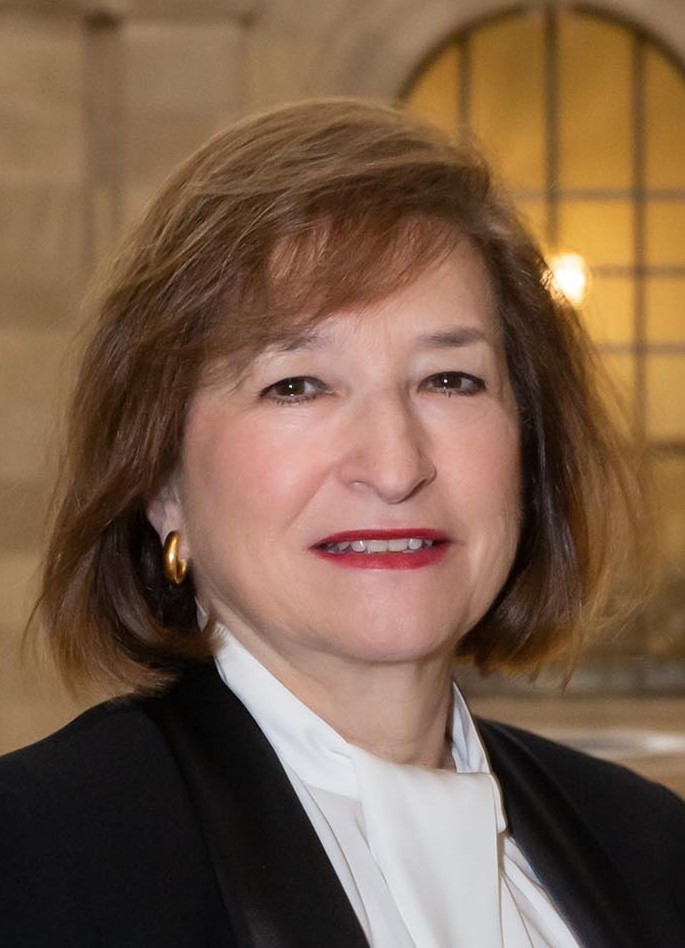
Concha spoke to Currency News™ about her career at the Bank and in the wider cash community, the key changes during her time there, the challenges of being a woman in a traditionally male-dominated environment, the role of cash in Spain and what she plans to do next.

Q: First of all, could you provide some details about your personal background and career history?

A: I graduated in Economics from Universidad Complutense de Madrid in 1979 and immediately after, in 1980, I joined Banco de España (BdE). I remained there for almost 42 years.

I spent the majority of my career working in financial markets, in both foreign reserve and asset management. I was appointed Director of the Market Operations Department in 2006, in charge among other tasks, of monetary policy implementation, not an easy task during the financial crisis and the government debt crisis in the eurozone.

In May 2015 I was nominated Associate Director General of Cash Management, responsible for cash processing, branch management and the new tasks in relation to banknote production. I was also appointed as Chair of the Board of Directors of the BdE Printing Works, IMBISA, with the mandate to set up the company and sponsor the project of the construction of its new premises.

In February 2017 I was promoted to Director General Cash and Branches, sitting on the Board of Directors and Governing Council of the BdE until my retirement in May 2022.

During all these years I had the privilege of being a member of several committees, working groups and taskforces at the ECB, BIS, IMF, World Bank and CEMLA, among others. I also attended many conferences and seminars, either as participant or as speaker.

Since I joined the cash area, I was a member of the Eurosystem Banknote Committee and of the Eurosystem Procurement System Steering Committee. In 2021 I became member of the Committee Advisory Group of the Digital Euro.

I was also member of the Plenary of the Central Bank Counterfeit Deterrence Group; of the Executive Committee of the Banknote Reproduction Research Centre and of the Policy Committee and of the Advisory Group of the European Banknote Conference.

The international relationships were really important to me. The tasks of central banks are in many cases unique and there is not a manual to learn, so the contact with colleagues of other central banks gave me the opportunity to learn from them, sharing experiences and best practices. They allowed me also to travel to many different countries and learn from other cultures.

Q: What are the main changes you have seen over the course of your career at the Bank in terms of cash – operationally and strategically?

A: Many changes occurred in the cash area over the 40 years, so I will refer only to the changes I think were of particular relevance.

In the operational field, in 2005 BdE set up the Auxiliary Depository System (ADS) - an external network of cash centers to store and distribute banknotes among the credit institutions, crediting/debiting into their accounts, managed by the private sector and under constant and daily BdE supervision. It followed the closure of many branches of the Bank, from 52 in 2002 to 15 nowadays (plus the headquarters).

The ADS has complied with its long-term target to increase the Bank’s points of distribution, improve the quality of the banknotes in circulation and increase sorting activity. It was a major change which proved to be efficient in terms of costs for the Bank and caught the attention of many central banks, which showed their interest in the system.

I would like to mention the investment and recent renewal of the equipment to gain efficiency, in particular the upgrade of sorting machines. The Bank has also improved its capability in R&D, been involved in technological innovation with different projects to improve equipment performance that are already used by other central banks. And it pays a lot of attention to the counterfeit analysis of banknotes and coins, setting up a new division with new facilities.

Strategically, I cannot forget the creation of IMBISA, which was formed in 2015 to cope with changes in the Eurosystem Production System that made it mandatory for the state-owned printer to be actually majority owned by the relevant NCB in order to be able to print euro banknotes.

The establishment of the new printing works, owned 80% by BdE and 20% by FNMT, was a major change for the Bank, which now has holistic responsibility for banknote management in Spain, from production to distribution, sorting and destruction. The creation of the company and the project for the construction of the new premises of IMBISA was really a challenge for the Bank.

Q: How are cash volumes changing in Spain? How are cash transactions changing? How is the cash cycle changing?

A: The use of cash in Spain as a payment instrument, as in other countries, has declined in recent years, accelerating with COVID-19 due to the change in payments behavior to be more digital and an initial drop in household spending. But as a recent IMF study states, ‘digital payments make gains but cash remains’.

Indeed, cash dominates retail payments in Spain and, according to the last BdE cash use survey published earlier this year, cash is the preferable means of payment and 3 out of 5 people interviewed declared that they use cash in a daily basis. Moreover, the number of cash payments is greater than card payments and 80% of Spaniards do not want cash to disappear. So, we are in Spain in a less cash but not in a cashless society.

Talking about flows of banknotes, it seems that for the majority of the European central banks, and Spain is not an exception, the flows from the public to professional cash handlers are declining. According to the monthly figures published by BdE, you can observe a decrease in lodgments in 2020 and 2021 which has finally stabilized in 2022, and a remarkable decrease of withdrawals in 2020, but with a reversal tendency in 2021 and 2022. Overall, the volume of both in 2022 remained at 85% of the amount prior to the pandemic.

The conclusion is that the demand for cash remains resilient in Spain despite an ongoing surge of cashless payment methods.

Q: Access to cash is a major focus for the Bank. How likely is it that cash can be sustained?

A: You are right, access to cash in Spain is becoming an important topic. There are many studies on the matter, not only carried out by BdE, but by a number of private economic Institutions and government bodies at both the national and regional level.

In my view, if euro cash become hard to access by the public or unreliable to use as a payment instrument, demand will diminish and the role of cash as a value anchor of the financial system will weaken or be lost completely. To some extent, it will be a self-fulfilling prophecy. This is why the access and acceptance of cash is so important and must be monitored closely.

I cannot speak now on behalf of BdE, but I think that it is important that central banks recognize the importance of maintaining access to cash and maintain their willingness to ensure that the wholesale cash infrastructure remains effective, resilient and sustainable.

Q: Is Denaria having a positive impact in raising awareness of the cash challenge and finding solutions?

A: As you know I have joined Denaria recently, a platform which aims to transfer to society the relevance of cash as an essential asset, not only in terms of economic interaction, but also for financial and social inclusion as cash allows all people to manage themselves, irrespective of their age, ability or geographical location.

It was born with an integrating vocation and to raise awareness about the effects of marginalizing cash, promoting wider acceptance and the presence of cash money in our lives for economic and commercial relations.

Denaria is a very young platform but some of its achievements are very relevant. For instance, the acceptance of cash as mandatory in commercial establishments since May 2022 introduced by Parliament in the Law for the Defense of Consumers. Denaria is disseminating this measure that implies a sanction in case of refusal to accept cash and raising awareness among regional and municipal authorities to ensure its compliance.

In addition, the platform maintains close relationships with public administration bodies at a national and international level, as well as with political parties and parliamentary groups, in order to achieve regulatory changes in accordance with the purposes of the Association.

It also denounces the difficulty of access to cash (withdrawal and deposit), encouraging politicians and stakeholders to find solutions.

There are many more actions that Denaria is carrying out, but not to be very long I would like just to add that a lot of work has been done in communications, both direct and indirect, generating via content in the media (traditional and social networks) a continuous debate around the need for cash, and especially the difficulty of accessing it.

Q: IMBISA was set up to produce Spain’s indent of euros. Is it now in production? What is its relationship with the Bank, and with the other Spanish banknote printer, FNMT?

A: The new IMBISA printworks will start the production of euro banknotes soon, being at the final stage of the accreditation by the ECB. The construction is complete and the management team has been working there since May last year, having already the two printing lines and all the machinery installed in the new premises.

The relationship with the BdE is excellent and there is a close collaboration between IMBISA and different departments of the Bank in many different fields. Since the creation of IMBISA, both organizations have cooperated very closely in both the management and the technical areas, especially when it comes to the project to build up the new printing works, and now there is a team spirit.

Regarding FNMT, the relationship is also very good, it being a shareholder of IMBISA with a stake of 20%. Both companies have common interests in many areas since they are part of the cash industry in Spain.

Q: With central banks focusing on developing digital currencies, do you think the previous focus in and investment on banknotes, and in particular quality and security, could suffer?

A: I do not think so. In all countries and despite the increase in non-cash payments, the demand for cash has increased due to its essential role as a savings instrument.

All central banks have a duty to safeguard the integrity and security of their banknotes to stay ahead of counterfeiters, investing in research on new technologies to improve security features in order to make banknotes more secure and resistant.

In the case of the Eurosystem, the ECB intends to issue a new series of euro banknotes and expects a final decision to be made next year on the design and technical choices for each of the denominations. This process began with the ECB Governing Council’s commitment to ensuring that banknotes are innovative, secure and attractive to European citizens.

Furthermore, Fabio Panetta, member of the ECB’s Executive Board, has said that the project to design the new euro banknotes will be implemented in parallel with the study on the digital euro. He added that both projects aim to fulfill the mandate of the ECB to provide European citizens with safe and secure money.

So, taking into account the commitment of the Governing Council and the speech of Panetta, I am convinced that banknote research projects will continue in Europe, and I foresee that also worldwide.

Q: The normal position of central banks towards cash of neutrality is cited by some as indifference. Do you think that central banks should be more engaged in supporting cash, particularly in those countries where it is in rapid decline?

A: You are right, central banks follow the principle of neutrality and free choice of the citizens of means of payment, not favoring one means of payment over another and trying not to influence public behavior.

But, banknotes and coins are legal tender, and cash is the only form of public money to which everyone can have direct access. So, the central banks have a fundamental responsibility, together with the banking sector, to facilitate the use of cash in payments by people and businesses.

To do that, and ensure both the supply of cash to financial intermediaries and access to the public, some central banks in countries where there is a rapid decline in the use of cash are involved in different initiatives. I refer particularly to traditional cash less countries like Norway or Finland that have realized the importance of having a cash infrastructure. We must learn from those countries in order not to make the same mistakes and do all that is necessary to keep the cash infrastructure in place.

The Eurosystem has a cash strategy which aims to ensure that cash remains widely available and accepted as both a means of payment and a store of value. All euro area national central banks must follow the strategy and undoubtedly more concrete actions at national level are needed.

Q: You were one of the few women in a senior position at a central bank, and have used this opportunity to encourage other women in the sector. How did you do this? And what advice would you give to the future female leaders in central banking?

A: We know that women working for a central bank or any public institution can be considered as privileged when comparing their situation with the private sector. Entry requirements are not discriminatory and social programs are in place to help strike a work/family balance.

In truth society, and the Bank, have changed a lot since I joined the BdE in 1980. In the 1980s and 1990s cultures were different and I, like other women working for the Bank at that time, learned along the way how to remove barriers by working hard to achieve equality. I was really lucky to have had bosses who gave me the opportunity to rise to new challenges, and, most importantly, I have a supportive partner and family who have helped me pursue a career at the Bank.

Let me add that for many years, I was accustomed to being the only woman in the room. When I became Head of Unit in 1986 I was surrounded by men, and 20 years later when I became Director of Department I continue to be surrounded by men, something that was disappointing. In 2017 I was the first woman in the Bank’s workforce to be promoted to Director General and I was the only woman on the Executive Committee.

Fortunately, the situation has changed and improved in recent years and when I retired, we were four women out of 11 members on the Executive Committee. Let me add that the change was perceived at all levels: the Bank achieved parity in the workforce, there are many women in intermediate and high management positions, and for the first time the Vice Governor is a woman.

I think that we do a much better job when both genders are represented, male and female. For this reason, in all the positions I have had I want to be sure that women, if they have the talent and want to do so, are given a chance to be promoted.

What is my advice I give to the future female leaders in central banking? As I said, the role of women working in BdE has improved significantly over recent decades and I have had the privilege and the responsibility to add ideas and recommendations to foster women’s leadership in the Bank.

I would like to share some advice: learn from the experience of other women, get inspiration from role models, get self-confidence, collaborate and do not compete with other women, do not be silent in the face of male discrimination, convey a message of equality, and last but not least, tolerate your own mistakes and learn from them.

I think it is very important that women believe in themselves. A woman must never tell herself, nor allow anybody else to tell her, that she cannot achieve something because she is a woman!

Q: You retired last year from the Bank? But are you retiring completely? If not, what are your plans and involvement in cash now?

A: Indeed, I am retired from the Bank but I am involved in some cash related initiatives. For example, I am President of the Advisory Board of Denaria, and sit on the Committee of Experts of Intergraf and on the Steering Committee of Cash Essentials. Since April, I am a member of the Currency News Advisory Board; thank you for giving me the opportunity to cooperate with CN.

I am also thinking to be engaged in other projects related to cash industry.

Q: If you could pick three words or phrases to sum up your career at the Bank, what would they be?

A: If I must choose three, they would be: hard work, luck and gratitude.

Let me explain why.

I worked really hard in my different commitments during my career, usually learning by doing.

I was lucky to have had bosses who gave me the opportunity to rise to new challenges, whom I thank.

And I am grateful to my colleagues at the Bank; without a professional team it would not have been possible for me to have success in my job and in personal development.

Subscriber content

Read the full article

Full access to Currency News articles, newsletters and archives.

Sign Up to Currency News Weekly

Receive regular updates on the latest news and articles posted on our website.