
Counterfeit Corner

Established in 2020 to support national law enforcement authorities in their efforts to fight financial and economic crimes and aid international cooperation, Europol’s European Financial and Economic Crime Centre (EFECC) has recently released its first threat assessment on the matter.
Titled ‘The Other Side of the Coin: An Analysis of Financial and Economic Crime’, the European Financial and Economic Crime Threat Assessment 2023 provides an in-depth assessment of the threats posed by financial and economic crimes at the EU level.
Whilst mostly focussing on money laundering, illicit financial transfers, corruption and fraud – including the growing use of cryptocurrencies in criminal activity – a section of the report has been dedicated to currency counterfeiting within the eurozone.
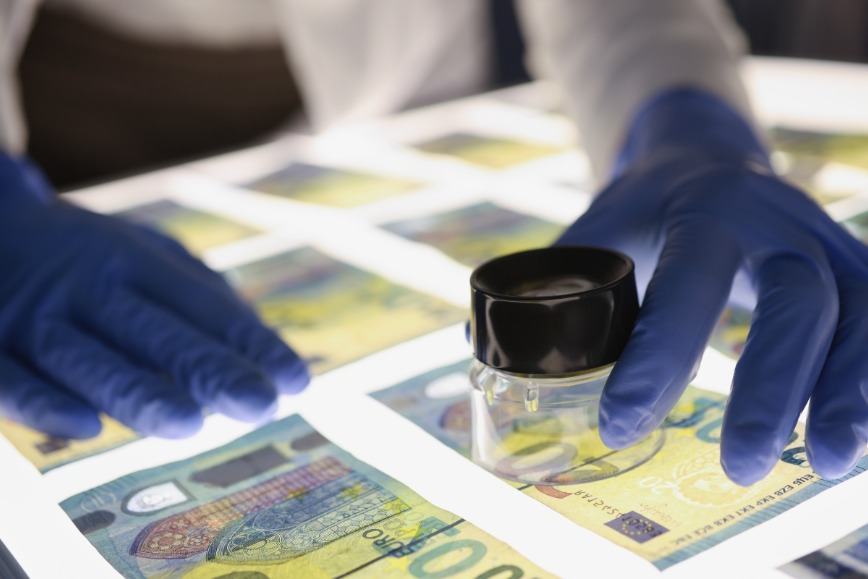
Talking about counterfeit euro banknotes distributed in the EU, the report points out that they are primarily produced in various member states of the EU. Raw materials, such as holograms, paper, and special inks, often come from Asia, purchased via e-commerce platforms and shipped in parcels and envelopes. Offset and digital printing remain major production methods for counterfeit banknotes. Illegal print shops are set up at various locations, including private premises and living spaces.
Subscriber content
Read the full article
Full access to Currency News articles, newsletters and archives.