Good Planning Leads to a Smooth Transition for Croatia
Croatia joined the Eurozone on 1 January 2023, bringing the number of European Union (EU) member states using the single European currency to 20.
The European Commission (EC) is monitoring the change. A survey a week into the new year found 51% of cash payments in shops were made in euros on 5 January and 93% of change handed out was in euros.
According to the Croatian National Bank (CNB), meanwhile, the main part of the euro changeover process ended smoothly, in line with the plan and without major difficulties. By 19 January, some 326 million kuna banknotes (65% of the estimated quantity) had been returned, and 443 million kuna coins (40% of the estimated total).
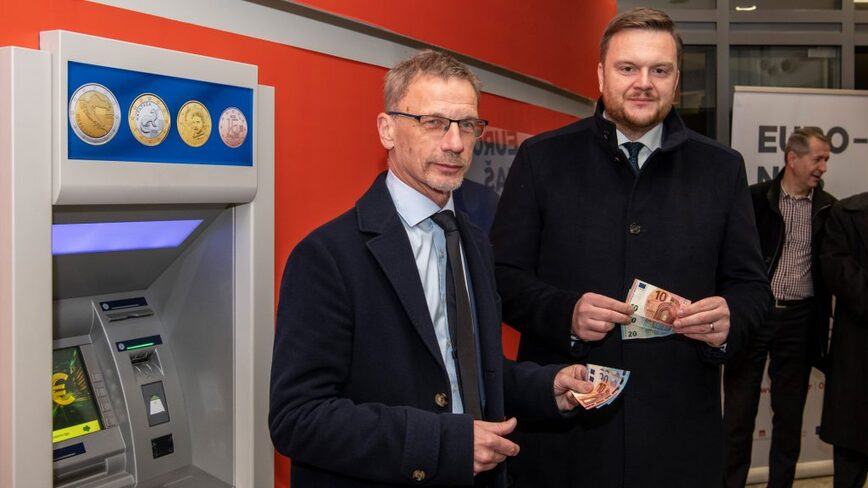
The smooth changeover was helped by the issue of euro banknotes and coins starting in December 2022. During the so-called frontloading period, banks were supplied with a total of €1.3 billion, which includes the value of euro coin starter kits. This equated to 627 million coins and 346 million banknotes, issued not just for the purpose of frontloading, but also for supply in 2023. By the end of the month, 55% of kuna notes and a third of coins had already been exchanged for euros. 70% of ATMs were distributing euros ready for 1 January.
In line with regular seasonal variations, some 4,000 bank-owned ATMs were active in December last year. Of these, 2,700 were gradually shut down to be adjusted, loaded with euros and put back in operation by 1 January. The remaining, approximately 1,300, ATMs were adjusted to euro operations in the first two weeks of the new year. For citizens to be able to quickly and easily find ATMs in operation, in mid-December the Croatian Banking Association published an interactive map of ATMs, providing information where kuna withdrawal was possible and as of 1 January this map featured all bank ATMs at which euro could be withdrawn.
Due to the reduction in the number of operational ATMs, banks decided not to charge fees for ATM withdrawals via debit cards by those who were not their clients in the period from 15 December to 15 January, thus considerably simplifying the process and making it easier for all users to find and use the closest ATM.
Drawing on the experience of countries that have already adopted the euro as their national currency, the CNB expects the return of some 1.1 billion kuna coins and more than 500 million kuna banknotes (about 320 million from circulation, the rest from bank vaults and strategic reserves) during the changeover.
After withdrawal, kuna coins will be kept in a prefabricated warehouse in the military compound in Zagreb until the expiry of the three-year period designated for exchange, after which they will be sold as secondary raw material. Withdrawn kuna banknotes will be destroyed by banknote processing systems equipped with shredding and counting equipment. The CNB has made provision to ensure sufficient storage space for withdrawn kuna notes in its vaults prior to destruction.
Kuna cash can be exchanged for euro notes and coins at the fixed conversion rate for 12 months, ie. to 31 December 2023. During this period, a maximum of 100 banknotes and 100 kuna coins can be exchanged free of charge at bank and post office branches. From next January, the exchange will only be possible at the CNB, but still free of charge. It will be possible to exchange kuna banknote for an unlimited period, but the exchange of kuna coins is only allowed for three years, ie. up until 31 December 2025.
The official changeover period ended on 14 January, with all transactions now conducted in euros only. One concern was that businesses might take advantage of the changeover to push up prices. From 5 September all businesses had to show prices in both euro and kuna. This requirement will remain in place throughout 2023.
Subscriber content
Read the full article
Full access to Currency News articles, newsletters and archives.