
· 5 min read

Design Thinking: Security that is Greater than the Sum of its Parts

Nikki Strickland
Nikki Strickland · Head of Product Marketing, De La Rue
Design Thinking: Security that is Greater than the Sum of its Parts

Banknote users see a holistic banknote when they transact but our industry doesn’t always think holistically. A significant proportion of our time is focussed on individual components and, whilst these are incredibly important, we risk overlooking the essential role of integration in unlocking the next wave of banknote innovation.

Pros and cons of disaggregating banknotes

Banknote procurement is increasingly disaggregated, with separate sourcing of substrate and security features. This raises the importance of having skilled banknote designers and manufacturers who can integrate an increasingly diverse range of components into a finished banknote that is durable, secure, functional, easy-to-manufacture and aesthetically pleasing.

A disaggregated approach encourages competition around component technology and increases the number of branded products available to issuing authorities.

However, it also introduces complexity, risks raising waste levels during manufacture and consequently increases the cost for those involved. It also impacts innovation in ways that may not be immediately obvious.

Driving security feature and substrate innovation

A disaggregated procurement model tends to drive value towards the components, which drives a focus on component-based research and development efforts. This encourages competition and ultimately leads to more advanced components.

IGNITE® is a good example of a security feature that has benefitted from the focus on innovation in this area – it’s a combinational thread with strong colour shift and movement that is doubly secure because of a combined presence of micro-optic and colourshift technologies, instead of a single component. Combinational features have developed due to thread focussed innovation.

Raising skills

The disaggregated approach towards banknote procurement raises the skill of the banknote designers and manufacturers. These integrators are required to invest time, effort and capital in new equipment to manufacture banknotes incorporating components from other suppliers. The components may not have been optimised for the make/model of manufacturing equipment of the integrator and they may not be immediately compatible with the other products of the integrator.

So, this process increases the integrator’s banknote design and manufacturing expertise.

Risks of a disaggregated approach

However, taken to an extreme, a disaggregated approach comes with the risk of missing the opportunity for innovation that focuses on the entire banknote. Suppliers saturate the market with their latest variant of a technology (or combination of technologies), but there is the risk it feels as though nothing truly innovative emerges.

Component-only manufacturers have an expectation that the integrator will always find a way to make their technology work. They can even run specific trials to qualify their latest developments under certain conditions.

However, if the component-only supplier isn’t routinely designing and manufacturing banknotes that combine a diverse range of individual components into a myriad of different banknote designs, they risk not being able to truly push the barriers of their technology as they won’t have the same breadth and depth of knowledge about what may be possible.

For issuing authorities launching a new series, the risk is reduced when the design, components and print are provided by the same supplier.

Importance of integration-driven innovation

Security threads are an early example of integration-driven innovation. The thread itself provides some security. However, it was the integration of the thread into the substrate that revolutionised banknotes when it first appeared.

The micro-optics embedded stripe NEXUS™ is a more recent example of a unique product being developed for banknotes that focussed on an innovation integration development. NEXUS™ was launched because of a desire for a security thread where a larger area of the effect was visible. This wouldn’t have been possible by focussing only on the security feature.

It’s all about the windows

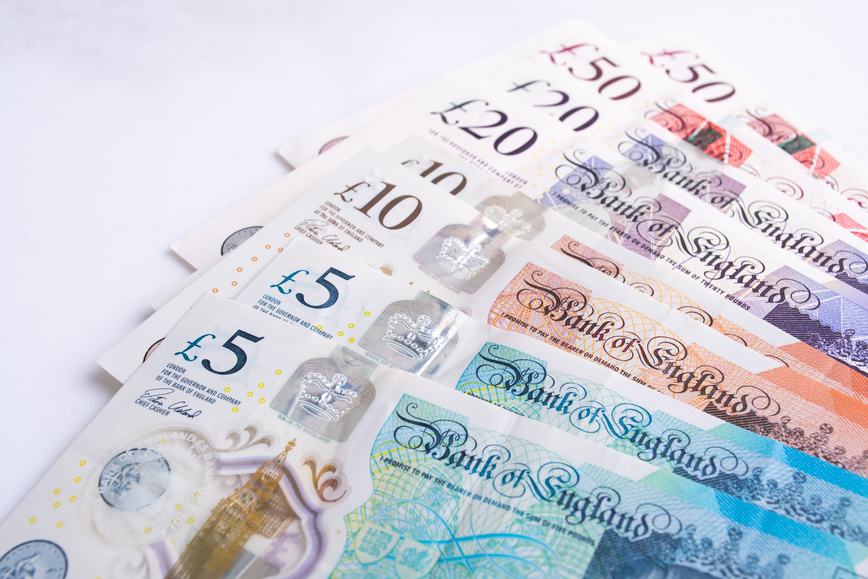
The windows in polymer banknotes are a standalone security feature that can be further enhanced by integrating specialist inks and components.

Windows represent a high impact and simple way to authenticate a banknote whilst providing an unambiguous public education message. The presence (or absence) of a window is more binary and more obvious than that of a watermark, especially as most polymer counterfeit notes are still produced on paper so can’t simulate the polymer windows convincingly.

Windows overall are another excellent example of integration-led innovation. They started as die-cut simple shapes in paper banknotes and relatively simple designs in polymer. Over time polymer innovations have evolved to enable more intricate window frames and customisable shapes, with design details that made the windows challenging to copy. In the past decade they have started to take on a key role for integration-led innovation.

Combined component and integration innovation

The integration of the security features into a polymer window today is equivalent in its significance to the integration of security threads into a paper substrate last century.

When a foil-based security feature or specialist ink is integrated into a polymer window it is visible on both sides of the banknote, meaning that a single feature can help protect the entire banknote. Integration innovation requires specially designed adhesives, tight registration to print details and layering of inks.

Colours require perfectly registered white inks underneath. Specialist inks add complexity and interactive elements that are hard to simulate.

Applied foils in polymer windows adopt intricate shapes and are carefully registered to the detail of the window. In contrast, counterfeit foils are typically a sticker with noticeable edges (that can’t be felt on genuine holograms) or are applied by tape with some discolouration and haze that shows the adhesive through the window. The polymer provides a smooth substrate surface that unlocks brighter and sharper effects, including some not possible on a paper substrate.

Polymer substrate contains multiple layers that combine with the banknote print, which means there are multiple layers and points of interaction to push the boundaries of design thinking and security feature integration.

Historic designs were constrained to paper layouts and structure, but this isn’t necessary going forward. Security features can increasingly be adapted to form part of an overall design with more fluid, customisable and complex shapes that offer stronger visual cues to support authentication.

In this sense the aesthetic also contributes towards the security.

Subscriber content

Read the full article

Full access to Currency News articles, newsletters and archives.

Sign Up to Currency News Weekly

Receive regular updates on the latest news and articles posted on our website.