
· 5 min read

Getting Cash Moving Again in a Crisis-Stricken Country

Astrid Mitchell
Astrid Mitchell · Editor
Getting Cash Moving Again in a Crisis-Stricken Country

Lebanon is no stranger to crises – having experienced four major shocks between 2019 and 2021 which have severely impacted the economy and the ability of the cash cycle to function properly. We spoke to Dr Georges Chalhoub, Director, Cash Operations at Banque du Liban to find out more, and also how, in the midst of this, the Bank continues to keep innovation alive.

Q: How long have you been with the Bank?

A: I have a PhD in Information Technology and I started in 1996 in the Bank’s IT Dept, before moving over to Treasury in 2007. Since then I was Deputy Director of Cash Operations. Earlier this year, I was promoted to Director.

Q: How did your formal training in IT impact your career at the Bank?

A: I brought my IT skills to bear on the Bank early on, and it’s propelled my career, especially as the Bank is passionate about and devoted to research and ongoing improvement.

Specifically, I was very active in the Bank’s development of ‘Smart Shelves’ for the inventory of both new and circulated banknotes. To my knowledge, the Bank was among the first central banks to use RFID tagging for its cash boxes. This project was successful in reducing risks associated with human error and security.

The Bank has also performed extensive circulation trials, publishing two reports on the experience. It was on projects such as these that a strong background in information technology was an advantage to the Bank and me personally.

Q: If we move now to the situation in Lebanon, it’s been through some very tough times recently. Can you describe these?

A: There have been four major shocks to the country since 2019.

First was the political crisis of October 2019 when, following months of civil unrest, the Prime Minister resigned. During this period the public turned their anger on the banks, which had to close for two weeks as a result.

Second was in February 2020 and the arrival of the first COVID cases in Lebanon.

Then, in March 2020, the government defaulted on its foreign debt for the first time in its history, sparking a financial crisis in which the value of the Lebanese pound plummeted.

And fourth, in August 2020 was the explosion at the Port of Beirut. It was on a scale with Hiroshima and Nagasaki in terms of its intensity. The blast was felt throughout Lebanon and the wider region, the damage was immense, as are the costs of reconstruction.

Q: What have been the economic impacts of these events?

A: Considerable. Cash in circulation increased from LBP 5 trillion to LBP 46 trillion over one year.

One of the big issues was the foreign exchange rate. Before the crises, the black market rate was LBP 1,500 to US$. Immediately afterwards, it shot up to LBP 4,000 just after the default on foreign debt and continued to increase sharply.

Q: So what did the Bank do?

A: The Bank introduced Circular 161 in December 2021, which involves the provision of cash to commercial banks in the form of US dollars at the exchange rate of the Bank’s electronic exchange platform ‘Sayrafa’. In turn, bank deposits are required to be made in Lebanese pounds.

The objective of this was to increase cash in circulation at the same time as mopping up the local currency and stabilising the exchange rate.

Q: How has all of this affected payments in the country?

A: Lebanon became a cash economy almost overnight. You can’t pay for anything with a card or by cheque – they won’t be accepted. This is because domestic bank accounts were frozen and people can’t get to their cash. So they will only take payments in cash.

So the key thing was to get the cash cycle moving again. Before the issue of the Circular, it was a one-way street with only withdrawals taking place, and no deposits. Thanks to the implementation of the Circular, however, cash is now beginning to flow back, resulting in the cash cycle starting to function again.

Q: Even amongst all of this, innovation has continued with your currency.

A: It has. We started the upgrade of the series in 2019 with a revised LBP 20,000, and then a new 50,000 in 2020. The changes were minor. In 2021 we issued a new LBP 10,000 livres and then a new LBP 5,000 last April The changes to these were more significant. The colour shift security thread has been replaced with a RAPID® micro-optic security thread. Additionally, the serial numbering was modernised, doing away with the previous fractional numbering which our high speed sorters weren’t able to read.

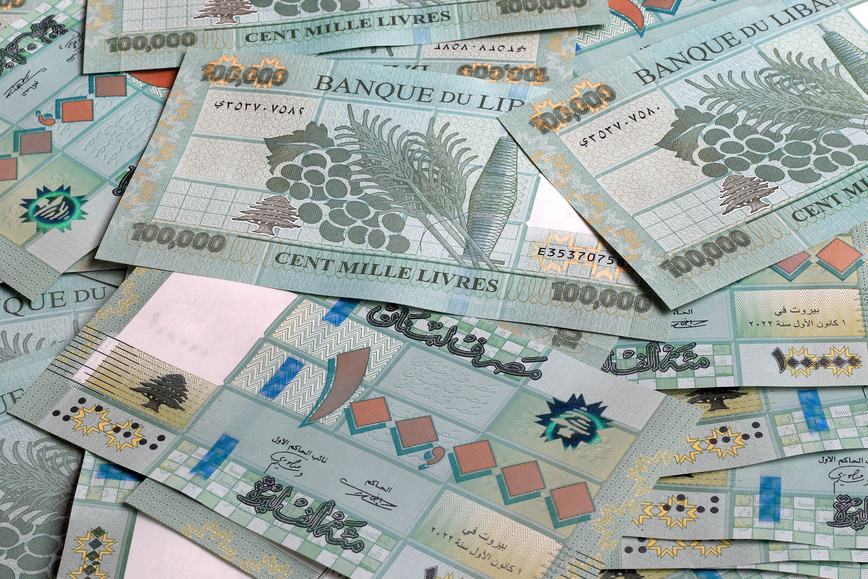
We completed the upgrade with a new LBP 100,000 note late last year. We also, in 2020, issues an LBP 100,000 commemorative polymer banknote.

Q: Lebanon has been suffering from very high inflation. Is there a case for a new high denomination note?

A: There have been calls for a higher denomination note, but this would be a political decision. Our mandate by law is to print only up to the value of LBP 100,000 so a new law would need to be passed, and it could be unpopular so no moves have been made yet.

Q: Finally, do you have any thoughts from your experience to share with other central banks?

A: Sadly, as we have all seen all too recently, crises come in many forms. I hope that the following thoughts can provide some insight to other central banks should they face a similar situation.

  • Measures to reduce the increase of cash in circulation by adjusting commercial banks withdrawals.

  • Continuous monitoring of cash inventory and performing short term simulation procedures taking into consideration the unexpected variation of money in circulation. Figures should be updated on daily basis.

  • An efficient adaptation of the business process workflow in accordance with board decisions and circulars. Sometimes there is no enough time for IT department to update your applications accordingly.

  • Encourage public sector related entities to deposit their cash revenues at the central bank. For example the collected cash of mobile operators from selling prepaid cards. This can reduce the money in circulation and the demand of foreign currency.

  • Monthly data collection from banks to know more how cash is distributed among different sectors and clients. Based on the data analysis you can adjust banks cash quota in local and Fx currency.

  • Think to issue larger denominations to reduce printing and cash processing cost.

Subscriber content

Read the full article

Full access to Currency News articles, newsletters and archives.

Sign Up to Currency News Weekly

Receive regular updates on the latest news and articles posted on our website.